
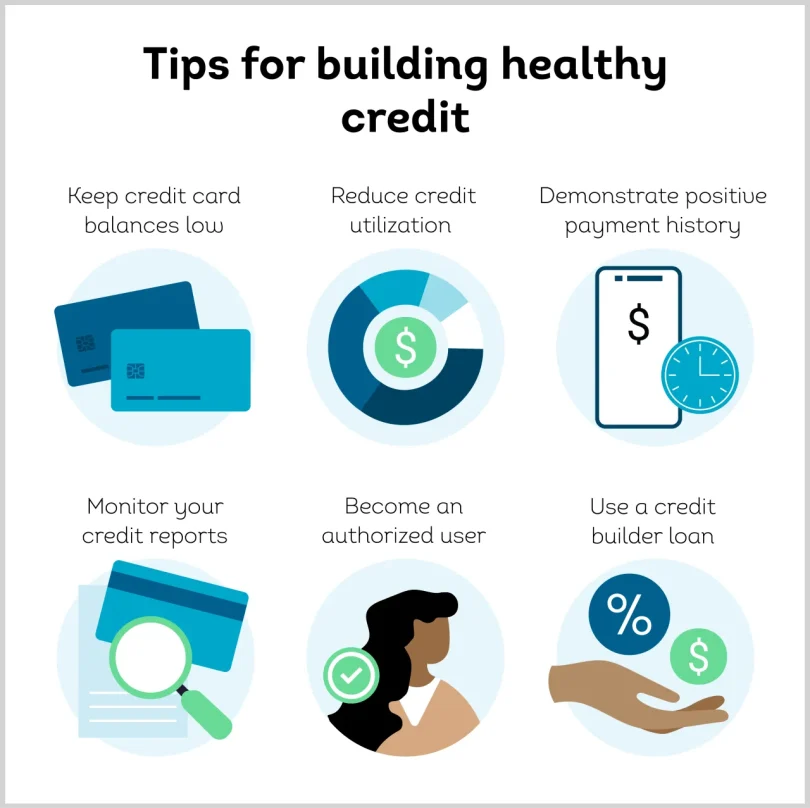

Your credit score affects more of your financial life than you probably think. This includes the interest rate on your mortgage, your car loan terms, and even your insurance premiums in some states. It can also influence your ability to rent an apartment or even get a promotion at work.
The good news is that maintaining good credit isn’t complicated. It doesn’t require financial sophistication or a high income. You just need a handful of consistent habits and enough awareness to catch problems before they do lasting damage.
- Pay on Time, Every Time
Payment history is the single largest factor in your credit score, accounting for roughly 35 percent of the calculation. One late payment can drop your score pretty significantly, and the damage lingers on your report for up to seven years.
Set up autopay for at least the minimum payment on every account. This means that even in a month where you’re busy or dealing with something unexpected, the payment goes out on time. Look at autopay as a safety net to prevent hurting your credit.
- Keep Your Credit Utilization Low
Credit utilization is the percentage of your available credit that you’re currently using. It’s the second most influential factor in your score. A person with $10,000 in total available credit and $3,000 in balances has a 30 percent utilization rate.
The general guidance is to keep utilization below 30 percent, but lower is better. People with the strongest credit scores typically maintain utilization in the single digits. High utilization signals to lenders that you’re heavily dependent on credit, which increases the perceived risk of lending to you.
If your utilization is high, there are two ways to bring it down:
- Pay down your balances; or
- Request credit limit increases on existing accounts, which increases your available credit without requiring you to open new accounts.
Most issuers allow you to request an increase online, and many will approve it without a hard inquiry if your account is in good standing.
- Don’t Close Old Accounts
The length of your credit history matters. A longer history gives lenders more data to evaluate your behavior, and it has a positive influence on your score. When you close an old credit card, you lose that account’s history, and you reduce your total available credit, which can increase your utilization ratio.
That means the card you opened in college that you never use anymore is still contributing positively to your credit profile by aging your history and adding to your available credit. Closing it because you don’t use it or because you want to “simplify” actually works against you.
- Monitor Your Credit Regularly
Errors on credit reports are more common than most people assume. Those errors can drag your score down without you knowing about it.
You’re entitled to a free credit report from each of the three major bureaus (Equifax, Experian, and TransUnion) every year through AnnualCreditReport.com. A practical approach is to pull one bureau’s report every four months, rotating through all three over the course of the year. This gives you ongoing visibility without having to wait a full year between checks.
When you review your report, look for accounts you don’t recognize, incorrect balances, late payments that were actually made on time, duplicate entries, any personal information that’s wrong, etc.
If you find inaccurate information, you have the right to dispute it with the credit bureau. File the dispute in writing, include supporting documentation, and send it via certified mail. The bureau is required to investigate and respond within 30 days.
If the bureau doesn’t correct the error within the required timeframe, or if they reinstate inaccurate information after initially removing it, that’s a potential violation of the Fair Credit Reporting Act (FCRA). The FCRA gives you the right to file a claim against the bureau or the furnisher (the company that reported the inaccurate information) for failing to maintain accurate records and respond to disputes properly. A consumer rights attorney can evaluate your situation and pursue action on your behalf.
- Protect Yourself From Identity Theft
Identity theft creates credit problems that take months or years to fully resolve. Here are some proactive steps you can take to protect yourself:
- Freeze your credit. A credit freeze prevents anyone from opening new accounts using your information, including you, until the freeze is temporarily lifted. Freezing and unfreezing are free and can be done online in minutes. If you’re not actively applying for credit, there’s almost no downside to keeping your files frozen.
- Set up fraud alerts. A fraud alert tells lenders to take extra verification steps before opening new accounts in your name. It’s less restrictive than a freeze but also less protective.
- Use strong passwords. Additionally, set up two-factor authentication everywhere it’s available. These basic security practices reduce your overall exposure to identity-related credit damage.
Putting it All Together
Good credit hygiene doesn’t have a finish line. In other words, it’s not something you can check off and complete. It’s ultimately a set of habits that run in the background of your financial life, protecting your score and saving you money on every major financial decision you make. If you can manage it correctly, you’ll set yourself up for long-term success.