
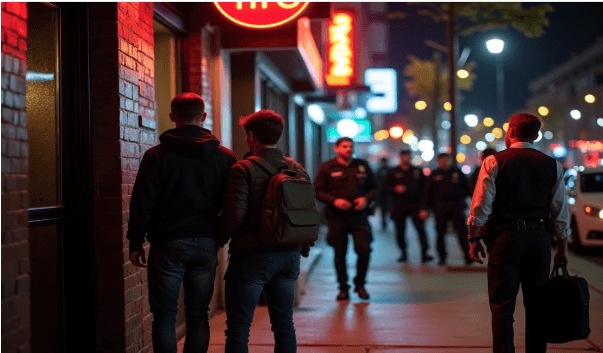

Nightlife in large cities follows clear patterns. People move between districts, choose venues based on opening hours, visible security, and predictable rules. In places like Miami, this is especially noticeable on weekends when entertainment areas operate late into the night under strict local oversight. A visitor planning an evening out often checks where venues are legally allowed to operate after midnight, how transportation works nearby, and what kind of security is present. This practical behavior is shaped by local regulations that govern nightlife spaces and platforms that reflect these rules in real use cases such as https://www.eros.com/florida/miami/eros.htm, where users navigate options with an implicit expectation personal safety.
Local nightlife regulations exist to balance economic activity, public order, and individual security. They influence not only how venues operate but also how visitors behave within night districts.
Contents
How Local Authorities Regulate Nightlife Activities
Municipal governments set the framework that defines what nightlife looks like in practice. These rules are designed to manage density, reduce conflicts, and ensure predictable conditions for residents, businesses, and visitors.
- Licensing requirements for different venue types
- Limits on operating hours by district
- Noise and zoning restrictions
- Compliance inspections and penalties
Licensing rules for venues and events
Licensing determines who can legally operate nightlife businesses and under what conditions. Bars, clubs, lounges, and event spaces must obtain permits that specify alcohol service, capacity limits, and allowed activities. Temporary events often require additional approvals.
Licenses are not static. Authorities may revoke or suspend them if venues violate safety rules or attract repeated incidents. This creates a system where compliance directly affects business continuity and shapes how nightlife districts evolve over time.
Noise control, zoning, and operating hours
Noise ordinances and zoning laws separate nightlife zones from residential areas. These rules define closing times, sound levels, and outdoor activity limits. In cities with mixed use neighborhoods, enforcement is often stricter to prevent conflict.
Operating hour restrictions influence crowd movement patterns. When venues close simultaneously, streets experience sudden congestion. Staggered closing times and designated zones help reduce pressure on transport and law enforcement services.
Safety Measures in Nightlife Districts
Safety in nightlife areas relies on coordinated measures rather than a single solution. Regulations set expectations while on the ground practices reduce real world risks.
- Visible enforcement and monitoring
- Environmental design for safety
- Crowd control procedures
Police presence and private security coordination
Local police departments often increase patrols in nightlife districts during peak hours. Their role is deterrence, rapid response, and coordination with venue security teams. Private security staff handle entry control, internal incidents, and early conflict de escalation.
Clear communication between police and venue operators allows faster resolution of issues. Cities that maintain consistent coordination experience fewer large scale disturbances and lower incident escalation rates.
Lighting, surveillance, and crowd management
Well lit streets and entrances reduce uncertainty and discourage opportunistic crime. Surveillance cameras provide both deterrence and post incident investigation support. Crowd management practices such as controlled entry points and capacity monitoring prevent dangerous overcrowding.
These measures are most effective when integrated into district planning rather than applied selectively. Consistency across venues helps visitors feel oriented and secure.
Responsibilities of Businesses and Visitors
Nightlife safety depends on shared responsibility. Regulations define minimum standards, but behavior determines outcomes.
Venue compliance and staff training
Businesses are responsible for staff training in conflict handling, alcohol service limits, and emergency procedures. Failure to intervene early often leads to incidents that attract regulatory penalties.
Regular inspections and mandatory training programs reinforce accountability. Venues that consistently comply benefit from smoother operations and stronger reputations within regulated districts.
Visitor behavior and legal accountability
Visitors are subject to local laws governing intoxication, public conduct, and restricted activities. Ignorance of these rules does not exempt responsibility. Cities enforce fines, removal orders, or arrests when violations occur.
Clear rules create predictable expectations. When visitors understand boundaries, they are more likely to act responsibly and avoid risky situations.
Conclusion: Balancing Regulation and Nightlife Experience
Local nightlife regulations shape environments where entertainment and safety coexist.
- Clear rules support predictable behavior
- Enforcement reduces escalation risks
- Design and planning enhance visibility and flow
- Shared responsibility sustains safe districts
Effective regulation does not eliminate nightlife culture. It provides structure that allows it to function sustainably. Cities that align legal frameworks with practical safety measures create night environments where people can socialize, move freely, and return safely without unnecessary friction.