
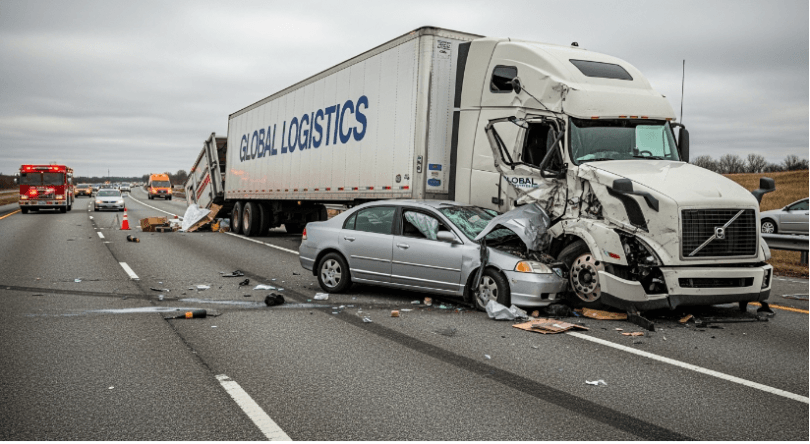

Large commercial trucks move through Cape Girardeau every day, carrying goods across highways, bridges, and busy city roads. These vehicles keep supply chains running, but their massive size also means that accidents involving them often raise serious legal and safety questions.
A truck crash rarely gets treated as a simple traffic incident. It usually triggers a detailed investigation that looks at every possible detail behind the collision. Officials review driver actions, truck condition, company practices, and road conditions before reaching conclusions.
These investigations often become the backbone of a truck accident lawsuit in Cape Girardeau, where each small fact can carry significant legal weight.
Key Factors Investigators Examine After a Truck Crash
Driver Behavior and Actions
One of the first areas investigators study is the behavior of the truck driver leading up to the crash. Driving a commercial truck requires constant attention because the size and weight of the vehicle leave little room for sudden mistakes. Investigators review whether the driver followed traffic signals, maintained a safe speed, and kept a proper distance from other vehicles on the road.
They also check for signs of distracted driving. Mobile phone use, eating while driving, or adjusting devices inside the cab can reduce attention on the road. Even a brief distraction can create dangerous conditions when a vehicle weighing tens of thousands of pounds is moving through traffic.
Police reports, witness statements, and sometimes traffic camera footage help investigators build a clear picture of how the driver behaved before the crash occurred. This information often becomes an important piece in determining liability.
Hours of Service and Driver Fatigue
Commercial truck drivers must follow strict federal rules that limit how long they can stay behind the wheel. These regulations exist because long hours on the road can lead to exhaustion, slower reaction time, and poor judgment.
Investigators often review electronic logging devices installed in the truck. These systems track driving hours and rest periods. If the records show that the driver stayed on the road longer than the law allows, fatigue may become a major factor in the investigation.
Driver fatigue is not always easy to spot through observation alone. However, logbooks, GPS records, and delivery schedules can reveal patterns that indicate the driver may have been pushing beyond safe limits.
Vehicle Maintenance and Mechanical Condition
A commercial truck must go through regular inspections and maintenance checks. Brake systems, tires, steering components, and lights must remain in good condition to keep the vehicle safe on the road.
Investigators examine maintenance records to determine whether the truck received proper servicing before the accident. If a brake system fails or a tire blows out because of poor upkeep, the responsibility may extend beyond the driver.
Mechanics may inspect the vehicle after the crash to identify mechanical failures. A worn brake pad or damaged steering component can quickly turn into a key piece of evidence during the investigation.
Cargo Loading and Weight Distribution
Cargo plays a bigger role in truck accidents than many people realize. A trailer that is overloaded or poorly balanced can make a truck difficult to control, especially during turns or sudden stops.
Investigators review shipping documents and loading procedures to see how the cargo was placed inside the trailer. They may also measure the total weight of the truck to ensure it stays within legal limits.
Improper loading can lead to several dangerous situations:
- Cargo shifting inside the trailer during travel
- Uneven weight causing the truck to tip during turns
- Excess weight puts stress on braking systems
If cargo handling mistakes contributed to the crash, the company responsible for loading the truck may become part of the investigation.
Trucking Company Policies and Oversight
A truck driver rarely operates alone. Most drivers work for transportation companies that manage schedules, vehicle maintenance, and safety policies. Investigators often look closely at how the company operates.
They may review driver training programs, hiring practices, and safety guidelines. If a company failed to train drivers properly or pushed unrealistic delivery deadlines, those decisions may contribute to unsafe driving conditions.
Company communication records can sometimes reveal pressure placed on drivers to stay on the road longer than recommended. These details may shape the direction of the investigation and affect the legal responsibilities of the parties involved.
Electronic Data and Crash Evidence
Modern commercial trucks contain electronic systems that record driving activity. These data recorders track speed, braking patterns, engine performance, and other details in the moments before a crash.
Investigators download this information to reconstruct what happened on the road. Data can show whether the truck attempted to brake, how fast it was traveling, and how the driver responded in the seconds before impact.
This digital evidence can become extremely important in legal proceedings. In many cases involving a truck accident lawsuit in Cape Girardeau, electronic data helps clarify the sequence of events with far greater accuracy than witness memory alone.
Final Thoughts
Truck accident investigations require patience and careful analysis because many elements can contribute to a crash. Driver behavior, mechanical issues, cargo loading practices, and company oversight all interact with road conditions and traffic patterns.
By reviewing each factor closely, investigators work toward a clear understanding of what happened and why. These findings often shape insurance negotiations, legal strategies, and court decisions.
For anyone dealing with the aftermath of a serious truck crash in Cape Girardeau, the investigation process becomes the foundation that determines how responsibility is assigned and how legal claims move forward.