

Southeast Asia’s property market is undergoing a quiet but significant transformation. Digital tools that once felt like conveniences — online listings, mobile mortgage calculators, virtual tours — have become the default infrastructure for how homes are searched, financed, and managed. From Hanoi to Jakarta to Kuala Lumpur, the shift is unmistakable.
What’s driving this? Largely the same forces reshaping every other consumer sector in the region: widespread smartphone penetration, maturing digital payments infrastructure, and a generation of buyers who expect on-demand, mobile-first experiences. The real estate sector is simply catching up to the standard consumers already expect elsewhere.
Contents
Proptech Platforms Changing How Buyers Search
Online property marketplaces have become the dominant discovery channel across Southeast Asia. Platforms now aggregate listings, price histories, and neighborhood analytics into a single interface, turning what was once a fragmented, agent-dependent process into a streamlined digital workflow. Recommendation engines, virtual tours, and integrated mortgage calculators mean that search, shortlisting, and financing now happen in the same digital environment.
For buyers, particularly cross-border investors moving within the region, this reduces information asymmetry significantly. Verified listings with standardized data and instant agent-matching tools shorten decision timelines and reduce the friction that once made cross-border property purchases feel risky. Developers and agencies benefit too, gaining detailed analytics on search behavior and conversion rates that help them sharpen their marketing strategies.
Digital Payment and Financing Tools Expanding Access
Fintech integration is gradually pulling real estate financing away from branch-based processes and embedding it directly into digital property journeys. Pre-qualification tools, automated documentation, and direct bank partnerships now allow buyers to receive mortgage estimates and conditional approvals without ever setting foot in a bank branch. This shift reflects a broader regional pattern where seamless digital transactions have become the baseline expectation across many consumer categories.
Singapore’s advanced digital infrastructure is a useful reference point here. The same payments ecosystem and digital-verification rails that enable smooth experiences across sectors — from e-commerce checkouts to platforms listing the best online casinos in Singapore — also underpin the digital mortgage and property-financing tools increasingly standard in the market. In terms of online gambling platforms, most of them are international offshore websites offering services that don’t exist in Singapore and other SE Asia countries.
What’s more, fintech apps, mobile gaming ecosystems, streaming platforms, and digital health services are expanding rapidly, reshaping consumer expectations and driving regional transformation.Together, these sectors illustrate Southeast Asia’s accelerating digital momentum, where seamless infrastructure and AI‑powered services increasingly define sustainable growth trajectories.
The global proptech sector was valued at approximately $36 billion in 2024 and is projected to grow steadily through the decade, according to industry market research, reflecting sustained investor confidence in digital real estate tools.
Singapore Leads SE Asia’s Digital Property Shift
Singapore functions as both a proving ground and a regional launchpad for proptech innovation. Its mature fintech ecosystem, high digital-literacy levels, and sophisticated regulatory environment mean that many digital mortgage tools, embedded finance products, and property-management platforms are piloted here before rolling out across Malaysia, Indonesia, and Vietnam. The city-state exports not just technology but also the consumer expectations that come with it.
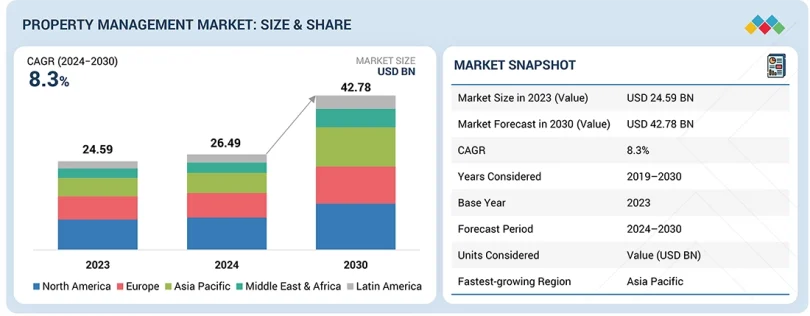
Asia-Pacific is now the fastest-growing region for property-management software globally, with the market expected to expand at a compound annual growth rate of 10.2 percent from 2026 to 2035, driven by institutional investors and REITs in markets like Singapore, according to this property software analysis. Cloud-native SaaS platforms centralizing rent collection, maintenance workflows, and tenant engagement are gaining serious traction among large landlords and institutional operators throughout the region.
What This Means for Regional Digital Consumers
For the average buyer or renter in Southeast Asia, the practical benefits are real and growing. More transparent pricing, instant pre-qualification, and access to digital-onboarding flows reduce the barriers that once made property transactions feel inaccessible or opaque. The integration of AI into tenant experience apps and dynamic pricing tools is also beginning to make property management more responsive from the consumer side.
Southeast Asia’s broader digital economy reached roughly $157 billion in 2024 and is forecast to hit $289.8 billion by 2029. Real estate is increasingly woven into that digital fabric rather than sitting apart from it. The property sector is no longer a laggard in the region’s digital economy — it’s becoming one of its more interesting growth stories. For consumers, that means more choice, more transparency, and a buying experience that finally reflects the connected world they already live in.