
The sunrisers hyderabad vs royal challengers bangalore match scorecard from the 2026 Indian Premier League records a spectacular batting contest at Rajiv Gandhi International Stadium, Hyderabad. Sunrisers Hyderabad produced 255 for four from 20 overs before Royal Challengers Bengaluru replied with 200 for four from their allotted 20 overs.
The 55-run victory was built around an explosive SRH batting performance, led by Ishan Kishan, Abhishek Sharma, Heinrich Klaasen, and Nitish Kumar Reddy. Kishan scored 79 from 46 deliveries, while Abhishek struck 56 from only 22 balls. Klaasen added a rapid 51 from 24 deliveries, giving Hyderabad an exceptional finish.
For readers searching for the royal challengers bengaluru vs sunrisers hyderabad match scorecard, this encounter provides a detailed look at how a powerful first innings can determine the direction of a T20 game. RCB also produced several impressive batting performances, including 56 from Rajat Patidar, 44 from Venkatesh Iyer, 41 not out from Krunal Pandya, and a rapid 15 from Tim David.
The srh vs rcb scorecard is particularly notable because both teams crossed a run rate of ten at different stages, yet SRH maintained a much higher scoring tempo. Hyderabad’s 255 came at 12.75 runs per over, while Bengaluru finished on 200 at exactly ten runs per over.
The match also carried significance within the broader 2026 campaign because it was the second meeting between these teams during the season. RCB had won the opening fixture on March 28 at M Chinnaswamy Stadium by six wickets, making the Hyderabad encounter an important reversal in the head-to-head record.

Contents
Overview of the Match
The sunrisers hyderabad vs royal challengers bangalore match scorecard becomes easier to understand when the match context, venue, toss, and playing conditions are considered together. SRH won the toss and chose to bat, giving its aggressive top order the opportunity to establish the target before the second innings.
The sections below connect those circumstances with the innings patterns and explain why Hyderabad was able to build such a large total.
Match Context and Importance sunrisers hyderabad vs royal challengers bangalore match scorecard
The fixture was Match 67 of IPL 2026 and took place on May 22 at Rajiv Gandhi International Stadium in Hyderabad. The encounter came after the teams had already met in the opening match of the season, where RCB successfully chased 202 against SRH.
That earlier result added an interesting layer to the second meeting. RCB had demonstrated its ability to chase a large SRH total in Bengaluru, while Hyderabad entered the rematch with an opportunity to respond on home conditions.
The sunrisers hyderabad vs royal challengers bangalore match scorecard therefore represents more than an isolated result. It shows how the balance between two high-scoring teams changed dramatically between their first and second meetings.
Hyderabad eventually produced the stronger all-round performance, particularly during the first innings. Its 255 for four placed considerable pressure on the RCB batting order before the chase even began.
Venue and Conditions
Rajiv Gandhi International Stadium in Hyderabad hosted the contest on May 22, 2026. The official match data describes the batting condition as fast and bouncy with an average batting assessment, while the pace-and-bounce bowling condition was also rated average.
Those characteristics suited aggressive stroke makers. SRH’s batters repeatedly attacked the ball through the powerplay and middle overs, and the boundaries accumulated quickly.
The the league hyderabad reference can be useful when searching for Hyderabad-based league match information, but the actual venue for this contest was Rajiv Gandhi International Stadium, Uppal. The official scorecard confirms the location and match timing.
The ground’s conditions did not prevent the bowlers from taking wickets, but the scoring rate remained extremely high. SRH reached 255 despite losing four wickets, demonstrating how effectively its batting unit converted deliveries into boundaries.

Toss Outcome and Its Impact
Sunrisers Hyderabad won the toss and elected to bat first. That decision immediately placed responsibility on the batting unit to use the fresh surface and establish a demanding target.
The decision worked particularly well because SRH’s top order attacked before RCB could build sustained pressure. Travis Head made 26 from 16 balls, while Abhishek Sharma scored 56 from 22 deliveries.
Once the opening phase had produced substantial momentum, Ishan Kishan and Heinrich Klaasen were able to attack from positions of relative control.
The srh vs rcb scorecard shows the consequences of that approach. SRH reached 255 for four, leaving RCB with a required rate of 12.80 runs per over at the beginning of the chase.
Innings Breakdown and Key Performances
The most important part of the sunrisers hyderabad vs royal challengers bangalore match scorecard is the contrast between the two innings. Hyderabad consistently found boundary options, while Bengaluru’s response was more controlled and could not match the extraordinary scoring rate required.
The following breakdown focuses on how each batting and bowling unit influenced the result.
Sunrisers Hyderabad Batting Analysis
SRH finished with 255 for four after 20 overs. Abhishek Sharma provided one of the most explosive starts of the innings, scoring 56 from 22 balls at a strike rate of 254.55.
His innings contained four fours and five sixes, allowing Hyderabad to accumulate runs at an exceptional pace. He was dismissed by Suyash Sharma with the score at 97 for two in the ninth over.
Ishan Kishan then became the innings’ main stabilizing force while continuing to attack. He scored 79 from 46 balls, hitting eight fours and three sixes.
Heinrich Klaasen added another major contribution with 51 from only 24 deliveries. His five sixes helped Hyderabad maintain its acceleration during the latter part of the innings.
Nitish Kumar Reddy finished unbeaten on 29 from 12 balls, including three sixes. His strike rate of 241.67 ensured SRH reached a massive total rather than slowing during the final overs.
The sunrisers hyderabad vs royal challengers bangalore match scorecard therefore demonstrates the value of maintaining attacking intent across multiple batting phases rather than relying on one individual.
Royal Challengers Bangalore Bowling Highlights
RCB’s bowlers faced an extremely difficult assignment because SRH attacked almost immediately. Rasikh Dar Salam was the most successful bowler with two wickets, although he conceded 52 runs in four overs.
Suyash Sharma took one wicket in three overs, while Krunal Pandya claimed one wicket from two overs.
Josh Hazlewood and Bhuvneshwar Kumar both completed four-over spells but conceded 55 and 51 runs respectively. Those figures illustrate the difficulty of controlling SRH’s aggressive batting on the night.
The sunrisers hyderabad vs royal challengers bangalore match scorecard shows that RCB did take wickets at useful moments, but the wickets were not accompanied by enough dot balls or economical overs to reduce Hyderabad’s scoring rate.
Royal Challengers Bangalore Batting Analysis
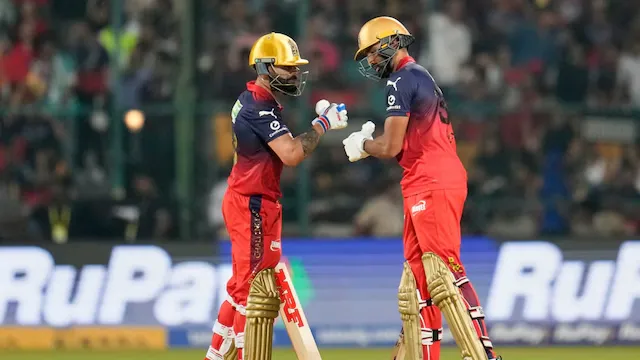
RCB’s chase began with the difficult task of maintaining more than 12 runs per over. Venkatesh Iyer gave the innings an aggressive start, scoring 44 from 19 balls.
His innings contained four fours and four sixes and produced a strike rate above 230. However, his dismissal in the fifth over removed one of RCB’s most aggressive early contributors.
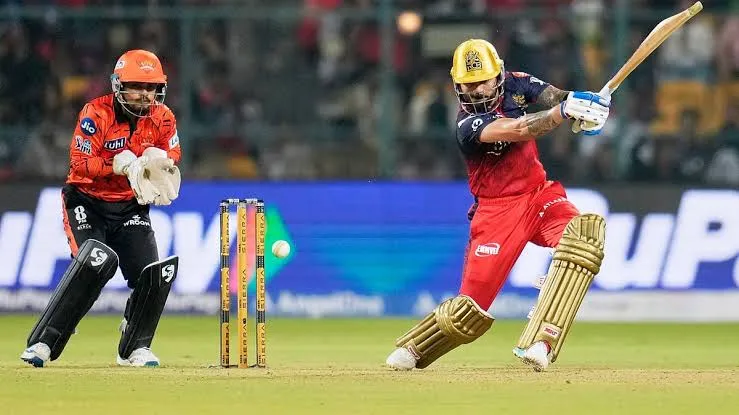
Virat Kohli scored 15 from 11 balls before Sakib Hussain dismissed him. Devdutt Padikkal contributed 21 from 14 balls, while Rajat Patidar produced the innings’ most substantial score with 56 from 39 deliveries.
Krunal Pandya remained unbeaten on 41 from 31 balls, and Tim David added 15 from seven deliveries. Despite those contributions, RCB finished on 200 for four, 56 runs short of the target.
The srh vs rcb scorecard therefore shows that RCB’s batting was productive but lacked the sustained acceleration required to keep pace with a target above 250.
Sunrisers Hyderabad Bowling Highlights
Eshan Malinga was the most successful SRH bowler, taking two wickets for 33 runs from four overs.
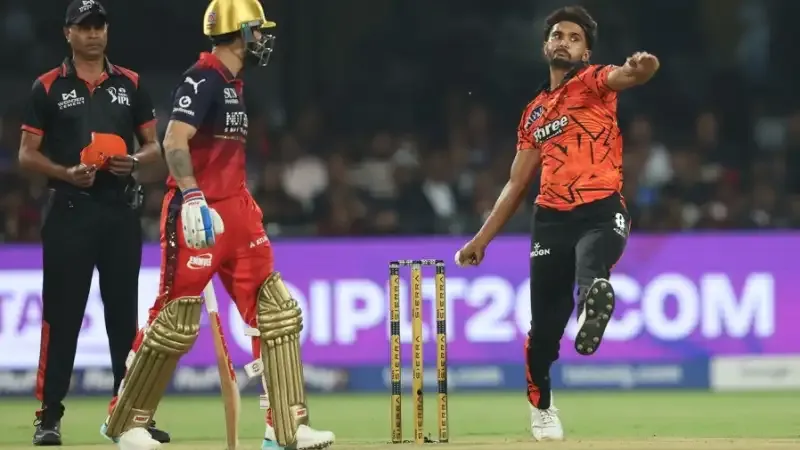
Sakib Hussain also played an important role by dismissing Virat Kohli while conceding 31 runs from his four-over spell.
Travis Head delivered an economical one-over contribution and also took the wicket of Rajat Patidar. Harshal Patel bowled four overs for 37 runs, while Bhuvneshwar Kumar completed four overs for 48.
The bowling unit’s main achievement was not simply taking wickets but preventing RCB from producing a prolonged sequence of extremely high-scoring overs.
Detailed Scorecard Statistics
The numerical details of the sunrisers hyderabad vs royal challengers bangalore match scorecard provide a clearer picture of how the 55-run margin developed. SRH’s batting strike rates were consistently higher, while RCB’s middle order was unable to reproduce the same level of boundary frequency.
The statistical comparison also highlights the importance of the first ten overs in shaping the eventual result.
Individual Batting Scores and Strike Rates
Abhishek Sharma’s 56 from 22 balls produced a strike rate of 254.55, making it one of the fastest significant innings of the match.
Ishan Kishan scored 79 from 46 at 171.74, while Heinrich Klaasen scored 51 from 24 at 212.50.
Nitish Kumar Reddy’s unbeaten 29 from 12 produced a strike rate of 241.67. Travis Head’s 26 from 16 came at 162.50.
For RCB, Venkatesh Iyer scored 44 from 19 at 231.57, Rajat Patidar made 56 from 39 at 143.58, and Krunal Pandya finished unbeaten on 41 from 31.
Tim David’s 15 from seven balls came at a strike rate above 214, but his innings arrived too late to alter the overall chase.
The sunrisers hyderabad vs royal challengers bangalore match scorecard consequently contains several impressive individual strike rates even though the final result strongly favored SRH.
Bowling Figures and Economy Rates
RCB’s most economical main bowler was Suyash Sharma, who conceded 36 runs from three overs at an economy rate of 12. Rasikh Dar conceded 52 from four overs at 13 per over while taking two wickets.
Krunal Pandya returned figures of one for 24 from two overs, giving him an economy rate of 12. Bhuvneshwar Kumar conceded 51 from four overs, while Hazlewood gave away 55.
For SRH, Eshan Malinga returned two for 33 from four overs at 8.25 runs per over. Sakib Hussain conceded 31 from four at 7.75, while Harshal Patel went for 37 at 9.25.
The srh vs rcb scorecard makes the difference particularly clear. SRH’s best bowling figures were considerably more economical than most of RCB’s spells.
Extras and Fielding Contributions
SRH’s first innings contained 14 extras, all recorded as wides in the official RCB scorecard. RCB’s innings produced eight extras, including two leg byes, one no-ball, and five wides.
Although extras did not determine the match independently, they contributed to the overall scoring environment.
Fielding also produced important moments. Abhishek Sharma took a catch to dismiss Venkatesh Iyer, while Eshan Malinga completed the dismissal of Rajat Patidar through Travis Head’s bowling.
The sunrisers hyderabad vs royal challengers bangalore match scorecard therefore reflects contributions from batting, bowling, and fielding rather than a result produced by one department alone.
Turning Points and Critical Moments
The most revealing moments of the sunrisers hyderabad vs royal challengers bangalore match scorecard occurred when one team was able to maintain pressure while the other temporarily lost momentum.
Several overs changed the scoring equation and made the final result increasingly difficult to reverse.
Key Partnerships and Wickets
SRH’s innings contained several important partnerships. Abhishek Sharma’s aggressive contribution gave the middle order an excellent platform.
Ishan Kishan then played the longest major innings for Hyderabad, scoring 79 from 46 balls. His dismissal came at the end of the innings, leaving SRH at 255 for four.
Klaasen’s 51 from 24 balls was especially influential because it arrived during the period when SRH could have slowed after losing Abhishek.
For RCB, the 56-run innings from Rajat Patidar was the main middle-order contribution. Krunal Pandya remained unbeaten, but the required rate had already become difficult to control.
Impactful Overs and Momentum Shifts
The opening overs of SRH’s innings immediately established the tone. Abhishek Sharma’s boundary-heavy approach pushed the scoring rate rapidly upward.
The dismissal of Travis Head at 3.6 overs did not significantly slow the innings because Abhishek and Kishan continued attacking.
The 16.2-over dismissal of Klaasen was another key moment. However, Nitish Kumar Reddy immediately maintained the acceleration, scoring 29 from only 12 balls.
During RCB’s chase, the dismissals of Venkatesh Iyer and Virat Kohli restricted the early momentum. Patidar and Krunal Pandya later produced useful runs, but the chase never reached the sustained scoring rate required.
Strategic Decisions Influencing the Outcome
SRH’s decision to bat first after winning the toss proved important because the team’s strongest batting phase came immediately after the innings began.
The aggressive use of the powerplay created a high baseline for the rest of the innings. Rather than relying on a final-over surge alone, Hyderabad distributed its attacking output across multiple partnerships.
RCB attempted to respond through aggressive batting, but wickets at key moments interrupted the chase.
The royal challengers bengaluru vs sunrisers hyderabad match scorecard therefore illustrates how strategic pressure can accumulate across a T20 innings. Once SRH had reached 255, RCB needed sustained boundary production from the beginning rather than relying on acceleration late in the chase.
Post-Match Summary and Implications
The final section of the sunrisers hyderabad vs royal challengers bangalore match scorecard brings together the result, individual awards, and wider significance of the encounter.
The match also changed the season’s head-to-head narrative because RCB had defeated SRH in the opening game, while Hyderabad responded with a convincing victory in the return fixture.
Result and Margin of Victory
Sunrisers Hyderabad scored 255 for four from 20 overs. Royal Challengers Bengaluru replied with 200 for four from 20 overs.
SRH therefore won by 55 runs. The official IPL scorecard confirms the final scores, venue, date, and result.
The the league hyderabad search phrase may lead readers toward general Hyderabad league information, but the relevant match here is the IPL 2026 contest at Rajiv Gandhi International Stadium.
The result was particularly notable because both teams had already produced a high-scoring encounter in March. RCB won that opening match by six wickets after chasing SRH’s 201 for nine with 26 balls remaining sunrisers hyderabad vs royal challengers bangalore match scorecard.
The second meeting therefore demonstrated a dramatically different pattern. SRH scored 255 and successfully defended the total, while RCB could reach only 200.
Player of the Match Performance
Ishan Kishan was officially named Player of the Match after scoring 79 from 46 deliveries.
His innings combined stability with aggression. Eight fours and three sixes allowed him to maintain a strong strike rate while also batting long enough to anchor the middle portion of SRH’s innings.
Abhishek Sharma’s 56 from 22 and Klaasen’s 51 from 24 were equally important to the overall total.
For RCB, Rajat Patidar’s 56 and Venkatesh Iyer’s 44 were the main batting highlights, while Krunal Pandya’s unbeaten 41 gave the chase some late stability.
Impact on Tournament Standings and Future Outlook
The srh vs rcb scorecard records an important result in the later stage of the 2026 league campaign. At Match 67, the points and net-run-rate implications were more significant than they would have been in the opening weeks sunrisers hyderabad vs royal challengers bangalore match scorecard.
The victory also gave SRH a response after the six-wicket defeat in Bengaluru earlier in the season.
The two 2026 encounters provide a useful comparison. RCB won the first meeting after scoring 203 for four in 15.4 overs against SRH’s 201 for nine. SRH then won the return fixture by scoring 255 for four and restricting RCB to 200 for four.
The contrast demonstrates how strongly T20 outcomes can change according to powerplay execution, boundary frequency, bowling discipline, and the timing of wickets.
The sunrisers hyderabad vs royal challengers bangalore match scorecard from Hyderabad therefore becomes an important statistical reference for the 2026 season.
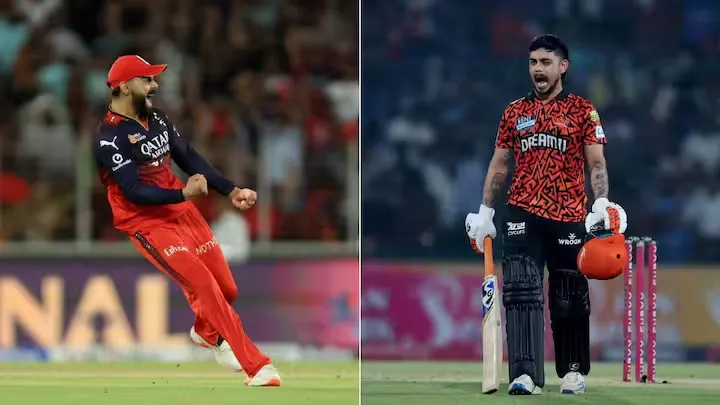
Conclusion
The sunrisers hyderabad vs royal challengers bangalore match scorecard from May 22, 2026, records a high-scoring contest dominated by SRH’s batting depth and aggressive execution.
Sunrisers Hyderabad reached 255 for four, powered by Ishan Kishan’s 79, Abhishek Sharma’s 56, Heinrich Klaasen’s 51, and Nitish Kumar Reddy’s unbeaten 29.
Royal Challengers Bengaluru finished on 200 for four. Rajat Patidar scored 56, Venkatesh Iyer made 44, Krunal Pandya remained unbeaten on 41, and Tim David added a quick 15.
The royal challengers bengaluru vs sunrisers hyderabad match scorecard consequently shows a 55-run victory for Hyderabad and a significant reversal from the teams’ first meeting of the 2026 season.
The srh vs rcb scorecard also highlights the importance of strike rate. Abhishek, Klaasen, and Nitish all scored at more than 200, while several RCB batters also attacked effectively but could not sustain the required rate for 20 overs.
The royal challengers bangalore vs sunrisers hyderabad match scorecard provides another useful search variation for the same encounter, although the franchise’s official current name is Royal Challengers Bengaluru.
The the league hyderabad reference should be treated separately from the formal match terminology, with the official venue being Rajiv Gandhi International Stadium, Uppal, Hyderabad.
The most decisive statistical feature was SRH’s ability to produce 255 for four despite losing four wickets. RCB’s bowlers took wickets but conceded heavily, with most of the principal bowling figures exceeding ten runs per over.
The sunrisers hyderabad vs royal challengers bangalore match scorecard also confirms that Ishan Kishan received the Player of the Match award after his 79 from 46 balls.
The match represented a sharp contrast with the March 28 fixture, when RCB chased 202 successfully in Bengaluru. The second meeting moved in the opposite direction, with SRH setting a much larger target and defending it comfortably.
For statistical readers, the sunrisers hyderabad vs royal challengers bangalore match scorecard offers a useful comparison between the two 2026 encounters and shows how different tactical executions can produce completely different outcomes.
The srh vs rcb scorecard ultimately tells a simple numerical story: 255 for four against 200 for four, producing a 55-run SRH victory.
The royal challengers bangalore vs sunrisers hyderabad match scorecard remains valuable for readers comparing the teams’ performances, particularly the difference between their opening fixture and their later Hyderabad meeting.
Overall, the sunrisers hyderabad vs royal challengers bangalore match scorecard captures a match defined by aggressive batting, rapid scoring, strategic pressure, and a strong response from Sunrisers Hyderabad after its earlier defeat.
The final numbers underline the central theme of the contest. SRH converted its batting opportunity into 255 runs, while RCB’s response reached 200 but could not maintain the extraordinary pace required to challenge the target.
The sunrisers hyderabad vs royal challengers bangalore match scorecard therefore provides a detailed snapshot of a high-intensity IPL 2026 encounter and an important chapter in the season’s rivalry between the two franchises.