
Is my e-bike a Class 2 or a Class 3? Most riders can’t answer, and after a collision with a car, that single blank is where fault starts to tilt. The rider assumes the bike is basically a bicycle. The driver’s insurer assumes it’s basically a motor vehicle. The officer at the scene writes down whatever the rider says, or leaves the field blank. Weeks later, a claims adjuster is reading that report and deciding who pays.
The class on the sticker, or the class the bike should have been labeled, ends up driving the whole dispute. Here is how one unchecked box moves through a case.
Contents
The Officer Checks a Box That Doesn’t Fit
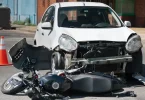
Picture a routine right-hook crash: a driver turning across a bike lane clips a rider going straight. The rider goes down, the driver stops, an officer arrives. The crash form has a vehicle-type field, and it was built for a world of cars, motorcycles, and ordinary bicycles. The officer picks “bicycle,” because the thing on the pavement has pedals, and moves on.
That one choice decides a lot. A federal safety review has flagged that police crash data has struggled to even identify e-bike collisions, which makes aggregated fault analysis unreliable and leaves individual cases turning on whatever the officer scribbled. A rider on a 28-mph pedal-assist bike and a rider on a throttle-only cruiser get recorded as the same thing.
When the claim is reopened months later, the record won’t tell anyone which it was. An experienced injury attorney will usually push to correct the record early, because the longer that wrong box stands, the harder it is to unwind.
Class 2 and Class 3 Are Not the Same Vehicle
The three-class system most states use looks tidy on paper and gets messy in practice. The short version:
- Class 1. Pedal-assist only, motor cuts out at 20 mph. Generally welcome on bike lanes and most multi-use paths.
- Class 2. Throttle-assisted, motor cuts out at 20 mph. Treated like Class 1 in many jurisdictions, but the throttle changes how the bike accelerates from a stop and how an adjuster sees it.
- Class 3. Pedal-assist up to 28 mph, no throttle (in most states). Often barred from standard bike paths, sometimes limited to riders 16 and up, and frequently requires a helmet.
A rider who swears they were “going around 18” on what turns out to be a Class 3 bike is handing the defense a wedge. The adjuster will point to the 28-mph ceiling and the trail restriction and start building a story about speed and the wrong place to be riding.
The Sticker on the Frame Is Doing Legal Work
Manufacturers are supposed to label the frame with the class, motor wattage, and top assisted speed. Many do. Plenty don’t, especially bikes sold direct-to-consumer or imported through smaller channels. And a nontrivial share of what gets sold as an “e-bike” online isn’t a low-speed electric bicycle at all under the governing definition: it exceeds 750 watts, or the motor-only top speed clears 20 mph, which pushes it into motor-vehicle territory.
That matters because the protections cyclists get, including the right to use bike infrastructure and the usual exemption from licensing and registration, attach to the low-speed electric bicycle definition. If the bike doesn’t meet it, those protections go away. The rider was operating an unregistered, uninsured motor vehicle on a public road. The crash analysis changes immediately.
Preserve the Bike Before Anyone Modifies It
The physical bike is the best witness to its own class. Before it goes back on the road, and before any shop touches it, a few things need to be documented.
- Photograph the class sticker. Capture the frame label showing class, motor wattage, and top assisted speed. If no sticker exists, photograph the spot where it should be.
- Record the controller and display. Many displays show the current assist mode and speed cap. A clear photo of the home screen preserves the setting the bike was in at the time of the crash.
- Save the purchase paperwork. The invoice, the manual, and the manufacturer’s spec page together establish what the bike was sold as.
- Note any modifications. Aftermarket controllers, firmware unlocks, or swapped motors can push a Class 1 bike into Class 3 territory, or out of the e-bike category entirely.
- Keep the bike as-is. Don’t repair, upgrade, or sell it until the claim is resolved. A rebuilt bike is a destroyed exhibit.
The Class Question Decides More Than Fault
Fault is the loud part of the fight. Class decides the quieter questions behind it: whether the rider needed a helmet, whether a minor was allowed to be on the bike at all, whether the lane the rider used was legal for that class, whether the driver’s insurer treats the loss under auto coverage or something narrower. Each of those sits downstream of a classification nobody confirmed at the scene.
Riders don’t need to memorize statutes. They do need to know, before anything happens, which class their bike is, whether it’s been modified, and where it is and isn’t allowed to ride. Ten minutes with the manual and the manufacturer’s spec page covers it. After a collision, that ten minutes is worth the entire case.