
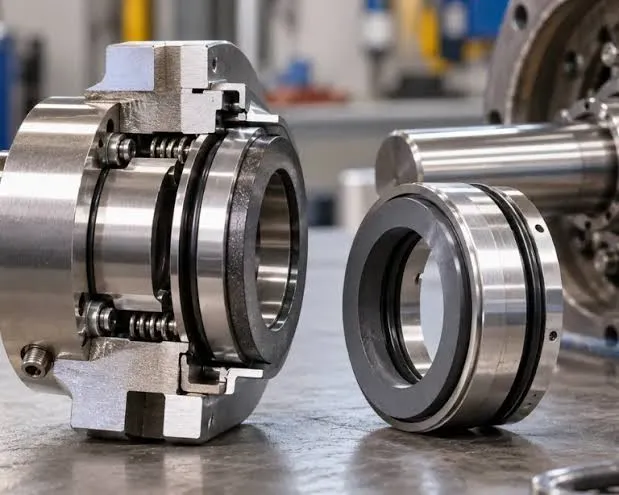

The pump ran for forty-one days. On day forty-two, the maintenance tech pulled the seal, laid the faces on a shop rag, and found the elastomer swollen so badly it wouldn’t seat back in the gland. The pump was a well-known brand. The seal was the one the OEM shipped with it.
The fluid was a solvent blend the plant had been handling for years. By the end of the week, two more identical pumps on the same line were leaking at the stuffing box, and the reliability engineer was staring at a replacement bill nobody had budgeted for.
The instinct in that room is almost always the same: blame the pump. Switch brands. Call the rep. The brand had almost nothing to do with any of it, though. The culprit was the fluid. Once you start asking the questions in the right order, the same pattern shows up on nearly every short-life seal failure a plant will see.
Why Did a Seal Rated for Years Fail in Six Weeks?
Seal life numbers in a catalog assume the seal is running in a fluid it was designed for, at the temperature and pressure the designer had in mind, with a clean, continuous film between the faces. Change any one of those and the clock resets.
Industry reliability guidance treats long seal life as a target that depends on the install actually being dialed in, not a performance guarantee. Experienced distributors like Illinois Process Equipment will push for the fluid data sheet before quoting a replacement seal, because the chemistry decides the life more often than the hardware does. Six weeks is not a seal problem in the way most people mean it. Six weeks is a chemistry problem wearing a mechanical costume.
The giveaway is the elastomer. When a secondary O-ring swells, hardens, cracks, or turns to goo inside the gland, the seal faces lose their reference. The faces separate under pressure, the film flashes, and what looked like a face failure on the bench was the rubber giving up first.
What Does the Fluid Do to the Elastomer?
Chemical compatibility plays a major role in how well an elastomer holds up inside a mechanical seal. Certain fluids can penetrate the material, causing it to swell, soften, harden, or lose its ability to maintain a reliable seal. EPDM, for example, generally performs well with water and many polar chemicals but can swell significantly when exposed to petroleum-based oils and hydrocarbon solvents. Even a properly installed seal can fail prematurely if its elastomer isn’t suited to the fluid moving through the pump.
Several common compatibility problems can shorten seal life. An elastomer may absorb a solvent and expand beyond its intended dimensions, lose flexibility after prolonged chemical exposure, or deteriorate when exposed to additives that weren’t considered during material selection. In each case, the resulting changes can interfere with the seal’s ability to function properly.
Temperature makes these problems worse. A material rated as compatible at room temperature may behave differently under actual operating conditions, particularly when heat accelerates chemical reactions or increases fluid absorption. Concentration matters just as much, because a diluted chemical may have a very different effect from the same substance at full strength.
The key is evaluating the elastomer against the complete fluid composition at the pump’s actual operating temperature and pressure. A compatibility chart is a useful starting point, but it can’t account for every solvent blend, additive, or process variation. The seal has to withstand what’s really flowing through the equipment, not just what the original specifications say should be there.
What to Ask Before You Replace the Seal Again
If a mechanical seal keeps failing prematurely, installing another identical replacement won’t solve the underlying problem. Before replacing it, confirm that the seal materials are compatible with the fluid’s chemical composition, concentration, and operating temperature. Check whether process conditions have changed and inspect the failed seal for swelling, cracking, or other signs of deterioration.
Chemical compatibility isn’t the only factor worth checking. The condition of the sealing surfaces can also affect performance, particularly when contamination, wear, or improper installation contributes to repeated failures.
Reviewing these factors with your seal supplier can help identify a more suitable material and prevent repeated failures. The goal isn’t simply to replace the damaged seal but to address whatever caused it to fail in the first place.