
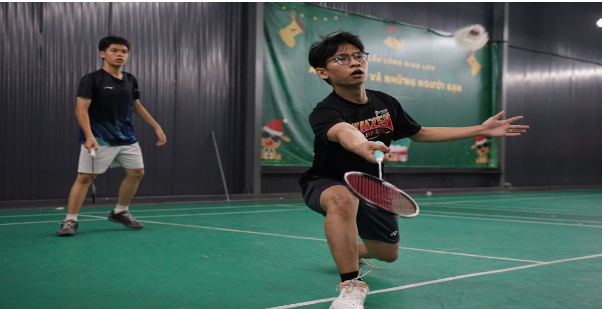

Vietnamese badminton has produced athletes capable of competing internationally, but the sport’s long-term future depends heavily on the strength of its domestic development system. Players such as Nguyễn Thùy Linh and Nguyễn Hải Đăng demonstrate different routes toward international competition, while coaches across the country continue to identify and develop younger talent.
The combination of local training centers, domestic tournaments, experienced coaches, and opportunities to compete abroad will determine how successfully Vietnam can develop its next generation of badminton players.
Contents
- 1 Local Training Centers Build the Foundation of Vietnamese Badminton
- 2 The Factors That Help Young Vietnamese Badminton Players Develop
- 3 Experienced Players Show What Long-Term Development Can Achieve
- 4 Nguyễn Thùy Linh Has Established Herself Internationally
- 5 Nguyễn Hải Đăng Represents Another Route to International Competition
- 6 Stronger Competition Can Connect Academies with International Badminton
- 7 Vietnam’s Future Badminton Talents Need Clearer Opportunities
Local Training Centers Build the Foundation of Vietnamese Badminton
Badminton development in Vietnam begins largely through provincial sports centers and local clubs. Young athletes learn fundamental movement patterns, racket control, shot selection, and basic tactical principles before progressing toward more demanding training programs.
Fans following major badminton competitions may also use Mel bet to access sports markets and live odds. Such services provide another form of entertainment around sporting events, although betting odds should not be treated as reliable predictions of match results.
Hanoi, Ho Chi Minh City, and Đồng Nai are among the areas with established badminton training activity. Players can train regularly and gain competitive experience through local and national events.
Domestic tournaments are particularly important because training alone cannot fully reproduce the pressure of competition. Matches expose young players to unfamiliar opponents, different tactical approaches, and situations in which they must make decisions without constant guidance from a coach.
The Factors That Help Young Vietnamese Badminton Players Develop
Badminton requires a combination of technique, physical conditioning, tactical awareness, and competitive experience. Development programs generally need to address several areas simultaneously:
- Footwork: Improving balance, speed, court coverage, and positioning.
- Technique: Developing serves, smashes, clears, drops, net play, and control over shot direction.
- Competition: Building experience against opponents with different styles and tactical approaches.
- Physical conditioning: Improving endurance, agility, speed, and the ability to maintain performance throughout demanding matches.
These elements are closely connected. Powerful shots have limited value if a player cannot reach the shuttle in the correct position, while excellent movement alone is insufficient without reliable technique.
Coaches therefore need to adapt training to the individual athlete. Younger players may develop physically at different rates, while technical strengths and weaknesses can vary considerably. Individualized training allows coaches to address specific limitations without abandoning the broader fundamentals of the sport.
Competition also becomes increasingly important as athletes improve. A player who performs comfortably during practice needs opportunities to test those skills under tournament pressure, where fatigue, nerves, unfamiliar opponents, and changing match situations become additional factors.
Experienced Players Show What Long-Term Development Can Achieve
Vietnam’s leading badminton players demonstrate how years of consistent development can eventually create opportunities at international level. Their careers also show that strong results in youth competitions alone are not enough. Progress toward elite badminton requires sustained training and increasingly difficult competition.
Nguyễn Thùy Linh and Nguyễn Hải Đăng provide particularly useful examples because their careers illustrate different routes toward competing internationally.
Nguyễn Thùy Linh Has Established Herself Internationally
Nguyễn Thùy Linh has become one of Vietnam’s most recognizable badminton players on the international stage. Born in Đồng Nai, she represented Vietnam at both the Tokyo and Paris Olympic Games, establishing herself as an important figure in Vietnamese women’s singles.
Alongside following major sporting competitions, some fans also use services such as Melbet online casino for other forms of digital entertainment. Casino games, however, are based on chance and should be treated strictly as entertainment rather than a source of predictable income.
Thùy Linh’s performances have helped bring greater public attention to women’s singles badminton in Vietnam. More importantly from a development perspective, her career demonstrates the value of regular exposure to international opposition.
Facing stronger players requires greater precision in shot selection, movement, defensive positioning, and tactical decision-making. International competition also reveals weaknesses that may be difficult to identify when competing only against familiar domestic opponents.
Her experience can therefore provide useful lessons for younger Vietnamese athletes. Reaching international level is not simply about developing one exceptional skill; it requires gradually improving multiple aspects of performance while maintaining consistency over a long period.
Nguyễn Hải Đăng Represents Another Route to International Competition
Nguyễn Hải Đăng has represented Vietnam across domestic and international badminton competitions and has emerged as one of the country’s notable men’s singles players.
His development illustrates the importance of gaining experience against a broad range of opponents. International men’s singles demands quick reactions, effective defense, physical endurance, tactical discipline, and the ability to maintain consistency during long rallies.
Regular competition helps athletes identify weaknesses that may not be obvious during training. An opponent with a faster attacking game can expose defensive problems, while a patient rally player can test concentration and endurance.
For Hải Đăng, continued exposure to different playing styles provides opportunities to adjust his technique and tactical approach. His progression also demonstrates that players developed within Vietnam can advance toward increasingly competitive international tournaments when given sufficient training and competitive opportunities.
Stronger Competition Can Connect Academies with International Badminton
Domestic tournaments provide young athletes with essential competitive experience. National championships introduce stronger opposition and allow coaches to evaluate how effectively players can transfer their training into actual matches.
Events such as the Vietnam Open provide another important step because Vietnamese athletes can encounter players shaped by different badminton systems and tactical traditions.
However, developing athletes capable of consistently competing internationally requires opportunities beyond domestic events. Players need exposure to tournaments abroad, where they encounter unfamiliar conditions, travel demands, different playing environments, and stronger international fields.
Managing this process is not simple. Coaches and federations must balance competition with training and recovery. Financial costs are another important consideration because international travel, accommodation, coaching support, equipment, and tournament participation can become expensive.
Sending a promising player to as many competitions as possible is therefore not automatically the best development strategy. Tournament schedules need to match the athlete’s current level and long-term objectives.
A structured pathway can gradually move players from local events to national competitions, then toward regional and international tournaments as their abilities improve.
Vietnam’s Future Badminton Talents Need Clearer Opportunities
Vietnam already has internationally experienced players and a promising domestic development structure. Athletes such as Nguyễn Thùy Linh and Nguyễn Hải Đăng demonstrate how sustained training and competitive experience can allow Vietnamese players to progress beyond the national level.
The next challenge is making that pathway more accessible to younger talent. Promising players need regular domestic competition, opportunities to face international opponents, quality coaching, and sufficient time to develop without expecting immediate results.
Stronger connections between provincial centers, clubs, national competitions, and international tournaments could make the progression from junior badminton to elite competition more consistent.
Vietnamese badminton does not depend on discovering a single exceptional player. Sustainable development requires a system capable of identifying talent repeatedly and giving those athletes the coaching, competition, and experience necessary to reach their potential.
If that pathway continues to improve, today’s local academies and training centers could produce a deeper generation of players capable of representing Vietnam successfully across Asian and international badminton.