
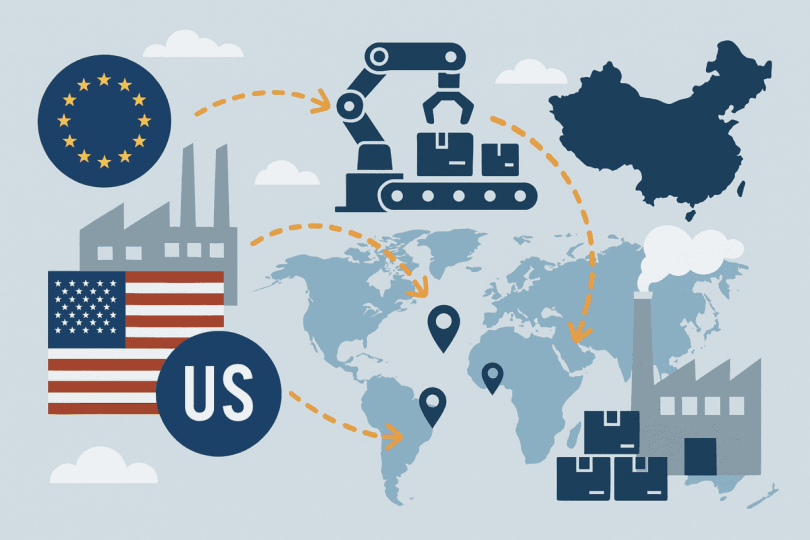

Current world events, such as the aftermath of the pandemic, the Russia-Ukraine War, and the U.S.-Iran conflict, have posed serious threats to U.S. manufacturing supply chains. Recently, Reuters reported that vessel traffic through Hormuz has fallen dramatically from usual levels, with shipping companies taking a cautious approach to resuming operations. This type of conflict results in higher fuel prices, freight rates, and insurance costs, as well as reduced transit dependability and disrupted inventory planning across the globe. As such, it is vital for companies to boost their operational resilience through a combination of diversification, digitalization, and domestic investment.
Diversifying Suppliers
Companies seeking to stand strong amid global tensions can begin by prioritizing supplier diversity. A study by the Atlanta-based Hackett Group has shown that companies that build relationships with diverse suppliers enjoy significant benefits. For instance, they generate procurement ROI that is 133% higher than that of average comparable businesses, adding an impressive $3.6 million to their respective bottom lines. These companies also have lower operating costs, spending an average of 20% less on purchasing operations and maintaining smaller procurement teams than competitors without supplier diversity programs. Diversification additionally promotes innovation by exposing companies to new products and services. Those that do not rely on a single supplier can enjoy greater competition in pricing and services among suppliers while also demonstrating their organization’s commitment to doing business in multiple markets.
Embracing Digitalization
Digital technologies are one of the key trends shaping the manufacturing industry’s trajectory. Not only are they driving innovation, but also redefining how products are manufactured, developed, and delivered to meet new consumer demands. Digitalization helps companies manage uncertainty and sustain their businesses. For instance, Industry 4.0 has revolutionized the industry through IoT technologies such as data analytics, the cloud, and AI. These technologies allow companies to set up smart factories and implement literally hundreds of individual projects across their plant network, enabling them to meet client demand more speedily and efficiently. Just a few use cases for digitalization include demand forecasting, asset maintenance, and remote inspections. These inspections are particularly useful for improving efficiency and reducing errors when travel is difficult or impossible.
Leveraging Strategic Inventory Management
Companies seeking to prepare for the onslaught of global conflict or economic recession may consider shifting from “just-in-time” to “just-in-case” inventory models. This strategy involves storing extra stock for key materials so production doesn’t halt when supply is threatened. It results in greater storage expenditure but increases the company’s chances of survival. Case studies for material storage include maintaining reserves of metals such as copper or titanium. Niche products such as titanium wire bulk can be particularly difficult to source, but are crucial in industries such as construction, electronics, and aerospace. As such, bulk buying of these materials can prevent the harm caused by supply shortages.
Boosting Domestic Manufacturing Capacity
Strengthening domestic capacity allows companies to gain faster access to key materials and labor without relying on imports. The reshoring trend, for instance, has seen many companies move production back to the U.S., often supported by government incentives such as tax credits, grants, and “Buy American” policies, which are linked to laws like the Inflation Reduction Act. Reshoring reduces companies’ exposure to port delays, tariffs, and geopolitical risks, boosting supply chain resilience. It also shortens production cycles, enabling faster delivery, demand adjustments, and stronger quality control near end markets. Currently, challenges to reshoring include higher upfront expenses for facilities and automation, as well as a labor skills shortage. Often, companies also have to invest in rebuilding or upgrading infrastructure, including power, transport, and supplier networks. Policy support is required to offset associated costs and to enable companies to make long-term efficiency gains. Companies should also prioritize establishing close relationships with local suppliers. By collaborating with the latter on strategies such as shared planning and transparency, companies can gain priority access during shortages and boost trust and stability.
Current global disruptions demand a deliberate change in how U.S. manufacturing supply chains are built and managed. Diversifying suppliers, embracing digital tools, and maintaining strategic inventories help companies absorb shocks rather than pass them along. Strengthening domestic capacity through reshoring and close local partnerships is vital to boosting overall resilience in the face of both economic and geopolitical challenges.