
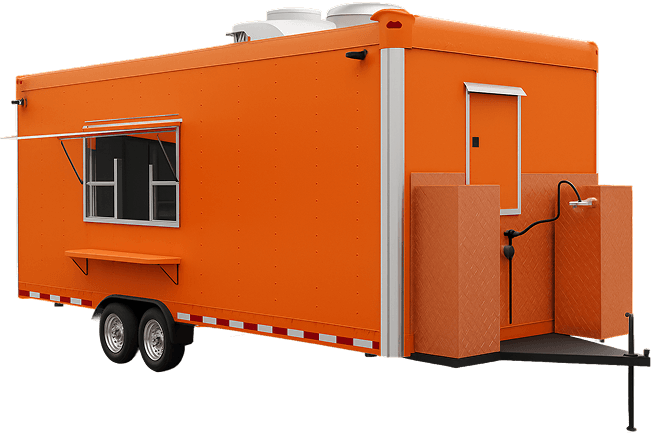

The food trailer industry has grown far beyond universal, one-size-fits-all layouts. Today, trailers are engineered around specific cuisines because each food concept has distinct requirements for equipment, power, ventilation, storage, workflow, and health-code compliance. Choosing the right food trailer build determines whether your mobile business can operate efficiently, safely, and profitably.
If you’re comparing configurations or evaluating manufacturers, reviewing professional builds such as a mobile kitchen trailer is one of the best ways to understand what features different cuisines require. The design of your trailer will define how quickly you serve customers, how consistent your product is, and how smoothly your staff can work inside a compact space.
Below is a clear breakdown of how food trailer builds vary depending on the cuisine you plan to serve — and why these differences matter.
Contents
- 1 Coffee Trailers: Precision Power and Workflow
- 2 BBQ Food Trailers: High-Heat, Heavy-Duty Commercial Kitchens
- 3 Hot-Food Trailers: Grills, Fryers, and Multi-Zone Cooking
- 4 Baking & Dessert Trailers: Temperature Stability and Display Space
- 5 Fusion & Specialty Cuisine Trailers: Blended Configurations
- 6 Why Build Differences Matter
- 7 Final Thoughts
Coffee Trailers: Precision Power and Workflow
A coffee trailer is typically one of the smallest yet most power-demanding mobile units. Even a small food trailer must be engineered for:
- high electrical load (espresso machines, grinders, refrigerators)
- stable water supply and wastewater systems
- fast, compact workflow for drink assembly
- storage for beans, syrups, dairy, and disposables
- customer-facing efficiency for morning rush periods
Unlike hot-food units, a coffee trailer rarely requires heavy ventilation or fire suppression, but it does require a reliable electrical system, clean surfacing, and ergonomic counter layout. Delivery speed matters — customers expect their order within seconds.
BBQ Food Trailers: High-Heat, Heavy-Duty Commercial Kitchens
A bbq food trailer is among the most complex and expensive builds because barbecue demands:
- smokers or large pits, often requiring outdoor mounting
- commercial-grade ventilation and fire suppression
- reinforced walls, ceiling, and insulation
- heavy-duty floors supporting large equipment
- expanded refrigeration for raw meats and storage
- large prep zones for trimming, seasoning, and holding food
BBQ trailers often exceed the size of a standard food trailer simply due to equipment weight and heat output. They also require careful airflow engineering—smokers can’t interfere with customer service areas or contaminate prep zones.
Hot-Food Trailers: Grills, Fryers, and Multi-Zone Cooking
Most traditional food trailers — tacos, burgers, noodles, fried foods — fall into this category. These builds need:
- fryers, griddles, charbroilers, or stovetops
- compliant hood ventilation with fire suppression
- handwashing and multi-compartment sinks
- cold storage for raw proteins and toppings
- hot holding stations
A proper hot-food layout creates a linear cooking flow:prep → cook → assemble → serve. Any deviation leads to congestion, delays, or cross-contamination risks.
Baking & Dessert Trailers: Temperature Stability and Display Space
Dessert trailers (donuts, pastries, ice cream, specialty sweets) prioritize:
- refrigeration or freezer units
- temperature-controlled prep space
- enclosed cases or display counters
- optional light baking equipment
Unlike a bbq or grill setup, dessert trailers focus on precision cooling and presentation. A small food trailer is often enough, but insulation quality is critical — desserts fail quickly in heat.
Fusion & Specialty Cuisine Trailers: Blended Configurations
Many modern mobile concepts combine cuisines — for example:
- coffee + pastries
- BBQ + sides
- tacos + birria + beverages
- Asian fusion + rice bowls
These setups require hybrid layouts, meaning:
- multi-zone prep
- dual cook lines
- modular refrigeration
- custom cabinetry
- flexible power and propane systems
This is where manufacturers build fully customized interiors, ensuring the trailer supports several cooking methods without compromising safety or speed.
Why Build Differences Matter
Regardless of whether you operate a coffee trailer, bbq food trailer, or a compact small food trailer, your build will affect:
1. Daily Service Speed
The wrong layout adds delay to every order, reducing revenue during peak hours.
2. Food Consistency
Equipment placement influences temperature control and product quality.
3. Safety and Code Compliance
Ventilation, fire suppression, plumbing, and materials must match your cuisine’s cooking method.
4. Long-Term Operating Costs
Poor insulation, weak electrical systems, or underpowered equipment leads to repairs, downtime, and higher utility costs.
5. Customer Satisfaction
A well-engineered trailer means faster service, cleaner workflow, and better food.
Final Thoughts
Cuisine-specific builds are no longer optional — they are the foundation of a successful mobile food business. Whether you’re launching a coffee trailer with high electrical demand, a smoke-intensive bbq food trailer, or a small food trailer designed for fast service and minimal cooking, your layout must support your workflow, equipment, and menu.
Understanding these differences from the beginning helps you invest in the right trailer configuration, minimize operational issues, and build a mobile kitchen that performs the way your cuisine requires.