
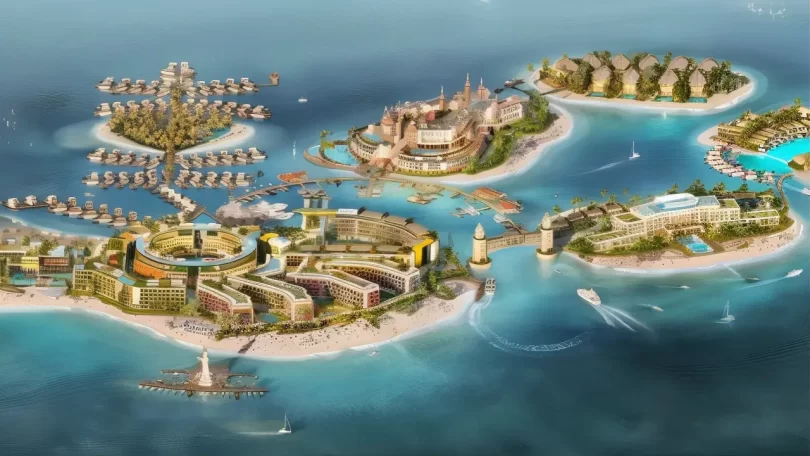

Dubai’s northern coastline is undergoing large-scale redevelopment. Formerly known as Deira Islands, the area has been renamed and restructured under the Dubai Islands master plan — a multi-island development aligned with the Dubai 2040 Urban Master Plan. The project introduces five distinct islands designated for residential, hospitality, commercial, and leisure use.
Spanning 17 square kilometers, the development includes Central, Shore, Oasis, Golf, and Elite Islands. Each is planned with a separate functional focus, ranging from high-density mixed-use zones to low-density wellness and luxury estates. The initiative is led by master developer Nakheel, with phased construction and handovers expected between 2026 and 2029.
Contents
Urban Planning and Land Use
Dubai Islands is designed as an integrated urban district with over 38,000 residential units, 86 hospitality assets, and approximately 21 kilometers of public and private beaches. In addition to residential and hotel developments, the plan includes:
- 9 marinas with sea access
- 2 golf courses (9- and 18-hole)
- More than 2 million square meters of landscaped open space
- Over 400,000 square meters of commercial and retail area
The land use strategy allocates specific zones for tourism, community services, retail, education, and green space, aiming to distribute population density while maintaining coastal access and mobility across the islands.
Residential Projects and Market Positioning
Residential development on the Central Island (Island A) is underway, with early-stage projects such as Isolana Residences, Cotier House by Imtiaz, Arya Residences, Zephyra Residences, and more offering a range of unit types including apartments, duplexes, townhouses, and penthouses.
Most new buildings follow a mid-rise, resort-style model with an emphasis on private amenities and walkability. Projects are targeting both end-users and investors, with unit prices starting around AED 1 million. Developers are positioning these as alternatives to more saturated areas like Palm Jumeirah or Downtown Dubai, offering coastal living with long-term value potential.
Access and Connectivity
The Dubai Islands development is connected to the mainland via the Infinity Bridge, enabling direct road access to Deira and central Dubai. Travel times include:
- 15 minutes to Dubai Maritime City and the cruise terminal
- 20 minutes to Dubai International Airport and Deira Old Town
- 25 minutes to Downtown Dubai and Business Bay
Internal mobility infrastructure includes plans for water transport, bicycle networks, and pedestrian corridors, designed to reduce reliance on private vehicles and enhance intra-island circulation.
Tourism and Hospitality Expansion
The project contributes significantly to Dubai’s tourism infrastructure. The planned 80+ hotels include wellness resorts, family hotels, boutique properties, and eco-conscious accommodations. Hotel clusters are concentrated on Shore and Oasis Islands, with additional waterfront resorts integrated into Central Island’s mixed-use core.
Hospitality assets are supported by complementary facilities including:
- Beach clubs and retail promenades
- Spa and fitness zones
- Marina-side dining and entertainment
- Art and cultural venues
The hospitality strategy supports year-round tourism while integrating short-term rental supply to meet rising visitor demand.
Regulatory and Investment Environment
Dubai Islands falls within a freehold zone, allowing 100% ownership for foreign nationals. Properties priced from AED 750,000 are eligible for UAE investor residency visas (2- or 10-year terms).
Investment-related features include:
- Entry-stage pricing across most projects
- High potential rental yields (projected 8–15% annually)
- Post-handover payment plans available through developers
- Short-term rental licensing permitted under Dubai Tourism guidelines
Given the scale and timeline of development, the area is viewed as a long-term play for capital appreciation and income-generating assets.
Dubai Islands is intended as a long-term urban expansion zone, relieving pressure from saturated coastal districts while advancing Dubai’s broader strategic goals around tourism, housing, and sustainability. The project’s segmented island model — separating high-density cores from leisure and wellness areas — reflects a structured planning approach now being replicated in other Gulf markets.
As infrastructure builds out and residential handovers begin, the area is expected to emerge as one of the city’s primary waterfront districts, serving both full-time residents and the tourism sector.