
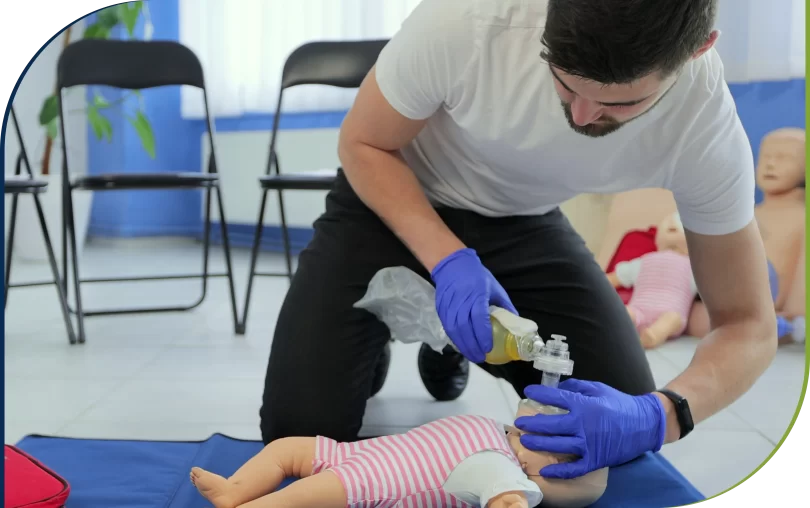

Every second counts in a Neonatal or Pediatric Intensive Care Unit (NICU/PICU). According to research published in Frontiers, early intervention can improve survival rates in critically ill children by up to 70%. When emergencies strike, hesitation can be deadly.
So, this is where Pediatric Advanced Life Support (PALS) certification makes a difference. It equips healthcare professionals with lifesaving skills throughout the spectrum of care, from the treatment of a patient in cardiac arrest to stabilizing a patient with a respiratory issue.
In NICUs and PICUs, where an infant or child with medical needs relies heavily on timely interventions, PALS training ensures that you can act both precisely and with confidence. You are about to learn more about how the certification improves patient outcomes and why it is imperative to get your PALS certification.
Contents
What is PALS Certification?
PALS certification is an advanced medical training program designed for healthcare professionals treating critically ill infants and children. The training covers a wide range of emergency procedures. Participants learn to recognize early signs of respiratory distress, cardiac arrest, and shock. They are trained in high-quality CPR, airway management, and medication administration during emergencies. PALS certification includes the proper use of defibrillators (manual for shockable rhythms), recognition of cardiac arrhythmias, and administration of emergency medications via IV or intraosseous (IO) access, as per provider scope. Unlike basic life support (BLS), which focuses on general CPR techniques, PALS goes deeper into pediatric-specific resuscitation and emergency care.
7 Ways PALS Certification Improves Patient Outcomes in Neonatal and Pediatric ICUs
In critical care, well-trained professionals make all the difference. PALS certification ensures that medical staff are prepared for emergencies, which reduces mortality and complications. Below are seven key ways PALS training enhances patient outcomes in NICUs and PICUs:
1. Faster Response to Emergencies
In neonatal and pediatric critical care, delays can be fatal. Infants and children deteriorate quickly due to their small body size and limited physiological reserves. PALS-certified professionals recognize distress signs early and act immediately.
They are trained to identify abnormal breathing patterns, irregular heart rates, and low oxygen levels before they escalate into life-threatening situations. PALS certification ensures that healthcare providers can act quickly, confidently, and efficiently.
2. Improved Airway Management
Airway obstruction is a major risk in pediatric emergencies. Unlike adults, infants and children have smaller airways, making them more prone to breathing difficulties. PALS training provides specialized techniques for managing pediatric airways.
Proper airway management prevents complications like brain damage due to oxygen deprivation. Additionally it also ensures that critically ill infants and children receive adequate ventilation that reduces the risk of long-term respiratory problems.
3. Better Use of Lifesaving Equipment
Hospitals have many machines that help save lives, but they must be used correctly. PALS certification teaches healthcare providers how to use these machines properly in emergencies.
If a child needs medicine quickly but their veins are too small, they may need intraosseous (IO) access, which delivers medicine through the bone. PALS training also helps providers read heart monitors to check if a baby’s heart is beating normally.
4. Enhanced Team Coordination During Emergencies
Emergencies require seamless teamwork. A well-coordinated medical team can stabilize a patient faster and with fewer errors. PALS training emphasizes structured communication and role assignment during emergencies.
Healthcare teams practice working together using standardized protocols. Each member knows their specific responsibilities, whether it’s administering medications, performing CPR, or managing the airway. Strong team coordination improves patient safety and reduces response time. 5. Reduced Risk of Medical Errors
Mistakes in hospitals can be very dangerous, especially in emergencies. Administering the wrong medicine or dosage can harm a child.
PALS certification helps reduce these risks by teaching healthcare workers clear and safe steps to follow. When healthcare workers follow the right steps, children get safer and better care. So this means fewer mistakes, faster treatment, and a higher chance of survival.
6. Higher Survival Rates in Pediatric Emergencies
Survival rates improve when healthcare professionals are trained to handle pediatric emergencies with precision.
Studies show that structured resuscitation protocols, like those taught in PALS, increase survival chances in children facing cardiac and respiratory arrests.
PALS training focuses on early recognition, rapid intervention, and effective resuscitation techniques. Timely administration of medications, high-quality CPR, and proper airway management all contribute to better recovery rates.
7. Continuous Learning and Skill Improvement
Medicine is constantly evolvingchanging, and doctors and nurses must keep learning new things. PALS certification is not just a one-time course. It requires healthcare workers to refresh their training every two years.
During this training, they learn about new ways to handle emergencies, improve their skills, and stay updated on the best treatment methods. They also practice lifesaving techniques so they are always ready when an emergency happens.
The Lifesaving Role of PALS
PALS certification is not just an added qualification. It is a key requirement for healthcare professionals in Neonatal and Pediatric ICUs. Moreover, when you get your PALS certification, it ensures that medical teams respond rapidly, manage airways effectively, and use lifesaving equipment correctly.
In critical care environments, such as NICUs and PICUs, PALS-certified professionals can act decisively when lives hang in the balance.. Ensuring that all medical staff are trained in PALS is an investment in better, safer, and more effective pediatric critical care, so get certified now