
Outdoor gatherings offer companies a practical method to encounter prospective buyers, showcase items, and develop brand recognition beyond standard show venues. Yet, merely erecting a canopy fails to ensure high levels of attendee engagement. Elements such as the aesthetic, site selection, identity presentation, arrangement, and guest journey collectively determine if individuals stop, step inside, and engage.
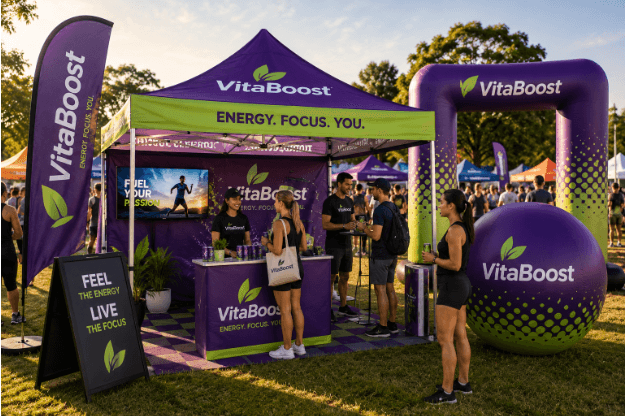
Customized tents allow companies to build a distinct area aiding particular event objectives. A properly crafted tent draws eyes from afar, renders the logo simple to spot, directs guests inside, and offers proper zones for samples or talks. Pairing the tent with branded inflatable balls and similar eye-catching items nearby creates a wider visual footprint that pulls foot traffic toward the booth from greater distances.
Return on investment for events relies on factors beyond just the raw headcount of attendees walking past. Companies need to evaluate metrics such as the volume of individuals stepping into booths, engaging with merchandise, talking to employees, handing over contact info, asking questions, or turning into leads. Such behaviors offer a sharper view of if the money spent on the event is actually generating value.
Consequently, a robust event strategy integrates aesthetic attraction alongside functional layout. Each section within the marquee must serve a specific role, ranging from placement of branding and signage through to access points, item showcases, chairs, illumination systems, and attendee engagements.
Contents
- 1 Tactical Design Approaches to Boost Visitor Counts Using Tailored Canopies
- 1.1 1. Choose a Visible Location
- 1.2 2. Make the Tent Easy to Recognize
- 1.3 3. Keep the Entrance Open
- 1.4 4. Use Displays to Attract Attention
- 1.5 5. Add Interactive Activities
- 1.6 6. Create Comfortable Conversation Areas
- 1.7 7. Use Lighting to Guide Attention
- 1.8 8. Connect Visitor Activity With Lead Capture
- 2 Final Thoughts
Tactical Design Approaches to Boost Visitor Counts Using Tailored Canopies
1. Choose a Visible Location
Where the tent is placed can greatly influence how many individuals see it.
Whenever regulations permit, choose a spot near crowded paths, doors, active zones, or similar areas with constant foot traffic. Placing custom inflatable arches at the entrance of your event zone further amplifies visibility; it signals your brand location from far away and gives guests a clear, welcoming entry point before they even reach the tent itself.
The site must likewise offer sufficient space for individuals to draw near without obstructing adjacent walkways.
Having a place that can easily be seen brings about greater chances for people to visit.
2. Make the Tent Easy to Recognize
Strong branding helps people identify the business quickly.
Apply the corporate emblem, primary hues, distinct signage, and concise communications throughout the canopy structure. Key brand elements must stay observable from various angles, particularly given that the shelter may be accessed from multiple flanks.
Don’t cover all surfaces with writing. Brief and obvious messages are typically simpler for guests to grasp when strolling by.
Clear branding improves recognition and attracts attention.
3. Keep the Entrance Open
Having an open entryway may help guests feel less hesitant when walking into the area.
Avoid positioning big screens, pieces of furniture, or advertising items straight opposite the primary entrances. Provide guests sufficient space to enter, observe their surroundings, and proceed toward merchandise zones or active sections.
Another benefit of an open layout is that it allows employees to see people coming near and greet them in a normal way.
Easy access encourages more people to step inside.
4. Use Displays to Attract Attention
Product presentations may offer guests a cause to halt.
Put key items, specimens, signage, or live shows in spots visible to guests without needing them to walk far inside the tent. Bigger visuals pull eyes from a distance, whereas tiny setups offer extra details when people get closer.
Maintain an arrangement of screens such that key elements stay readily visible.
Well-planned displays help turn passing interest into visits.
5. Add Interactive Activities
Individuals remain longer if provided with tasks that offer utility.
Based on the specific occasion, companies may feature product demos, samples, interactive tasks, displays, playthings, live shows, or brief talks. Such engagements offer spontaneous chances for employees to start dialogues.
This action needs to link up with the brand or item instead of just getting thrown in there to bump up the headcount.
Interactive experiences can increase visitor involvement.
6. Create Comfortable Conversation Areas
When guests remain present sufficiently to engage in substantive dialogue, the worth of foot traffic increases.
Provide appropriate chairs, desks, work surfaces, or compact discussion zones whenever room permits. Such locations may allow employees a superior environment to grasp client requirements, respond to inquiries, and describe offerings.
For business-focused events, perhaps a more secluded zone would prove beneficial. Regarding public gatherings, basic chairs might suffice.
Comfortable areas can support longer conversations.
7. Use Lighting to Guide Attention
Proper illumination allows significant zones to become simpler to detect.
Select appropriate illumination to accentuate product showcases, signage, demo zones, or primary brand elements. Illumination may further render the tent structure seem more inviting, especially when hosting night-time functions or hybrid indoor-external assemblies.
Avoid excessive illumination unless it serves a distinct function. The primary objective must aid guests in identifying focal points and determining areas worthy of investigation.
Purposeful lighting improves visibility and presentation.
8. Connect Visitor Activity With Lead Capture
Bringing attendees inside the marquee represents merely a single component of overall event achievement.
Organizations may employ QR codes, basic forms, scheduling tasks, item data sheets, or various appropriate instruments to gather helpful guest specifics. Maintain the workflow rapidly so guests do not sense that submitting their data proves hard.
Data gathered ought to assist the firm in grasping attendee curiosity and enabling practical post-event engagement.
Basic methods of gathering leads may convert attendees at events into possibilities for later engagement.
Final Thoughts
Achieving maximum return on investment for a bespoke tent involves factors beyond merely designing a visually appealing framework. Organizations must evaluate specific site locations, visibility levels, access points, visual elements, and incentives that promote longer visitor retention times.
Distinct brand identity, spacious arrangements, functional screens, engaging tasks, relaxed talk zones, intentional illumination, and straightforward data collection may combine to boost significant guest engagement.
Top-tier event planning prioritizes both volume and caliber. While a massive turnout appears striking, genuine dialogue, tangible product engagement, vetted prospects, and subsequent contact chances indicate greater commercial worth.
When bespoke tents are planned with both attendee requirements and event objectives in mind, they may evolve into something beyond simple coverings. They might function as useful branding areas that draw focus, promote engagement, and assist companies in securing higher worth from each gathering.