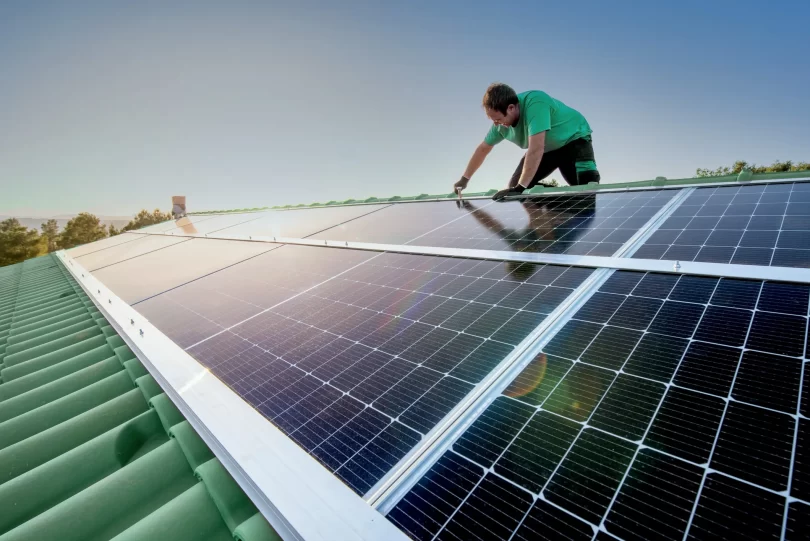

If you’re a homeowner in the United States, chances are you’ve come across ads, mailers, or door-to-door pitches claiming that solar panels can be installed on your home at “no cost.” Understandably, this raises skepticism—after all, nothing in life is truly free. At Spartan Solar, we prioritize honesty and transparency, and in today’s entry we’ll demystify the concept of “no-cost” solar, explaining what it really means and whether or not it applies to you and your home.
If you’d like to skip the reading, take a listen to the short video below!
[[VIDEO EMBED]]
Contents
Utility Grid vs. Solar Power: A Financial Comparison
To understand “no-cost” solar, it’s important to first look at how solar energy compares to electricity from the utility grid. Most homeowners simply accept their utility bills as a necessary expense with no alternatives; however, solar presents a way to eliminate or significantly reduce these costs.
When you switch to solar:
- You stop paying for grid electricity. A properly sized solar panel system replaces your reliance on the grid, except for small mandatory connection fees charged by utility companies.
- You reduce overall expenses. Solar typically lowers monthly power costs, so the shift from utility electricity to solar is financially advantageous for most homeowners.
In essence, you’re trading one expense (utility bills) for another (solar), but with solar, your costs are usually lower—and your savings start right away.
How Homeowners Can Switch to Solar
While utility power offers only one payment model (pay-as-you-go), solar gives homeowners several financial options. These include:
1. Cash Purchase
Homeowners pay the total cost of a solar system upfront, covering all equipment, installation, and warranties in one lump sum. This approach eliminates utility bills entirely, but it’s not considered “no-cost” due to the initial investment.
2. Traditional Financing
With this option, homeowners finance the system, spreading the cost over time with monthly payments. These loans typically have no upfront costs, making this a “no-cost” option.
3. Lease or Power Purchase Agreement (PPA)
Instead of purchasing the system, homeowners lease the equipment or pay for the electricity it produces. This model closely resembles how utility companies charge for electricity and also involves no upfront costs, qualifying it as “no-cost.”
What “No-Cost” Really Means
Both traditional financing and lease/PPA options are marketed as “no-cost” solar solutions because they require no out-of-pocket expenses for installation or activation. At Spartan Solar, we offer these options nationwide, ensuring qualifying homeowners can switch to solar without upfront costs.
Here’s how these models work:
- Traditional Financing: You pay a fixed monthly amount to own the solar system over time. These payments are often lower than your previous utility bills.
- Lease/PPA: You pay a monthly fee to lease the equipment or purchase the electricity it generates. Again, these costs are generally lower than utility rates.
In either case, the financial benefits are immediate. Instead of increasing expenses, solar usually saves money month-to-month compared to utility electricity. The “no-cost” label reflects this lack of upfront costs and the potential for immediate savings.
Explore Your Solar Options with Spartan Solar
Skepticism is natural when hearing about “free” or “no-cost” solar options, but these offers are legitimate for many homeowners. If you qualify, you can have a system installed on your home without out-of-pocket expenses, and your monthly energy costs may drop right away.
At Spartan Solar, we believe in providing clear, transparent information to help homeowners understand their options. If you’re curious about “no-cost” solar and want to see if it’s available for your home, we’re here to help. Contact us today to explore whether this option is right for you and start saving on your energy costs.