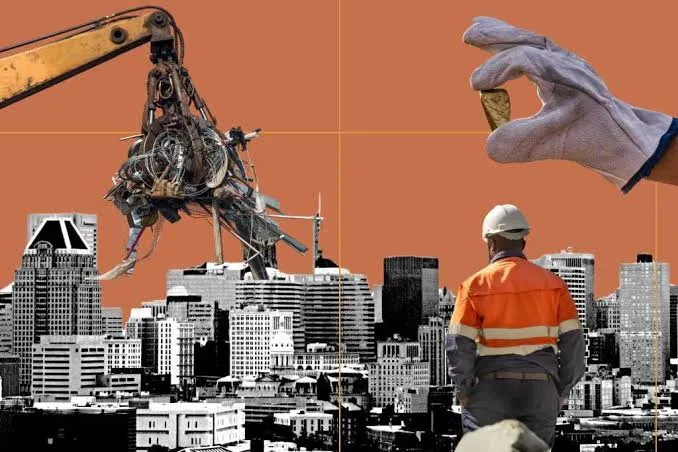

When people picture mining, they picture extraction: trucks, tailings, and whatever ends up in a pit at the end of the shift. The waste is treated as the unavoidable cost of getting the valuable stuff out. But a growing slice of the materials industry is quietly flipping that math, turning yesterday’s discarded minerals into engineered products that command real prices.
It’s not glamorous work, and it rarely makes headlines. So how is this niche reshaping what a cleaner, more profitable minerals economy actually looks like?
Contents
Waste Streams Are Becoming Feedstocks
For decades, the standard playbook for mining byproducts was containment. Build a pond, line a pile, monitor the runoff, and move on. That approach is getting harder to defend, both from a regulatory standpoint and a balance-sheet one.
The shift underway is toward treating those byproducts as raw inputs for something else. The U.S. Geological Survey has documented how mine waste increasingly gets evaluated for residual critical minerals, structural value, and reuse potential rather than as a pure liability. That reframing changes what a site is worth and how operators plan for closure.
The economics are starting to follow. When a tailings stream contains usable silica, alumina, or rare-earth-bearing fractions, the calculus stops being about disposal cost and starts being about yield.
Ceramics Are Doing More of the Heavy Lifting
A lot of the conversion work happens in ceramics. Industrial ceramics aren’t the decorative kind; they’re engineered materials that handle heat, abrasion, and chemical exposure that metals and polymers can’t survive. That makes them a natural destination for mineral waste that’s already rich in the oxides ceramic processing needs.
A few common end uses help explain why demand keeps growing:
- Lightweight aggregates. Engineered ceramic aggregates replace natural stone in concrete and geotechnical fill, reducing weight and improving thermal performance in buildings and infrastructure.
- Proppants. The oil and gas sector uses ceramic proppants to hold fractures open during well stimulation, and higher-strength variants can extend well productivity in deeper formations.
- Catalyst supports. Refineries and chemical plants rely on ceramic substrates to host the active materials that drive emissions controls and chemical conversions.
- Wear components. Liners, nozzles, and grinding media made from advanced ceramics outlast their metal counterparts in punishing service, cutting downtime and replacement costs.
None of these markets are speculative. They’re long-running industrial categories where buyers care about consistency, certifications, and unit cost.
Small Innovators Hit a Wall at Scale
The gap most early-stage materials companies fall into is the one between a working lab process and a sellable product line. A founder can prove a formulation in a benchtop kiln. Reproducing that result at ten thousand pounds a week, with predictable particle size and reliable phase chemistry, is a different problem.
That’s where toll processing matters. Rather than raise capital to build a plant before there’s a customer, a startup can run production through an existing facility that already owns the calciners, mills, and analytical equipment. Specialists in advanced ceramic toll manufacturing let mineral innovators move from pilot batches to commercial volumes without betting the company on capex they may not need yet.
The other benefit is technical. A toll partner with deep ceramics expertise catches the small process variables that turn a good lab result into an inconsistent product. Things like binder behavior during granulation or thermal lag inside a sinter.
Policy and Capital Are Pointing in the Same Direction
The push to onshore critical-mineral supply chains has put a spotlight on every domestic source of material that wasn’t being counted before. That assessment continues to inform federal funding priorities, which in turn shape where private capital flows.
Waste mineral streams sit squarely in that conversation. They’re domestic, often already permitted, and they don’t require opening new ground. For investors looking at materials startups, the projects that pencil out tend to be the ones that pair a real customer pull with a credible path to scale.
What to Watch Over the Next Few Years
Three things are worth tracking for anyone following this corner of industry. First, expect more partnerships between mine operators and specialty materials companies, since the operator owns the feedstock and the materials company owns the conversion know-how.
Second, expect toll manufacturing capacity to keep filling up. The shops that can deliver tight specifications on calcined and sintered products are already booked out, and that’s a constraint on how fast the broader ecosystem can grow.
Third, watch the closure economics. If a mining company can recover value from a tailings facility instead of paying to monitor it indefinitely, the entire lifecycle of a project starts to look different.
That’s a meaningful shift, and it’s happening quietly while the rest of the industry argues about headline projects.