
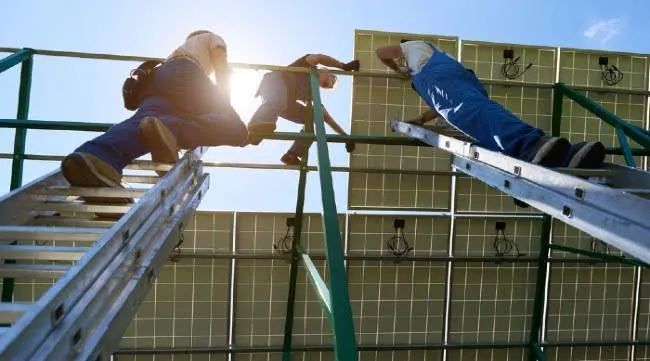

A worker falls from a scaffold. The height is real, the injuries are real, and to anyone watching it looks like the most straightforward construction case imaginable.
Surprisingly, scaffold and ladder falls are among the hardest injury cases to actually win, because the evidence that decides them tends to disappear inside 48 hours, and almost nobody at the scene thinks to hold onto it.
Falls remain the defining hazard of the trade. OSHA reports that in 2024 there were 389 fatal falls to a lower level out of 1,034 construction deaths. Non-fatal falls run into the tens of thousands more. Yet when a case reaches a claims desk or a courtroom, height and injury alone rarely carry it.
Contents
The Problem Is Not the Fall, It’s the Vanishing Scene
A scaffold gets dismantled the next morning. A ladder gets tossed in a truck and driven to another site. Guardrails get bolted back on. The debris pile that would have shown how the plank shifted is gone by lunch.
None of this is a conspiracy. It’s a jobsite trying to get back to work. Once the scene is gone, though, the story becomes whatever the people still standing say it was. And the people still standing are usually not the injured worker.
Why the Obvious Fix Falls Short
Incident reports are written by the employer. They get drafted quickly, sometimes before the injured worker has spoken to anyone, and they tend to emphasize worker conduct: what the person was doing, whether they used the harness, whether they followed the toolbox talk from that morning. Even honest reports frame the event through the writer’s lens.
And while fall protection, ladders, and scaffolding sit at the top of the most-cited standards in construction year after year, a citation against an employer isn’t the same thing as a finding that anyone owes you money.
There’s also a legal wrinkle most workers never hear about. Once a serious injury happens and litigation is reasonably foreseeable, the employer has a duty to preserve evidence, as attorneys have noted. In practice, that duty is only as strong as the demand letter that triggers it. Wait too long and the scaffold is already on another job across town.
What Actually Works Is Preserving the Small Stuff Early
The cases that hold up are the ones where somebody moved fast and captured the details that would otherwise be gone by morning. This isn’t about filing a lawsuit. It’s documentation, plain and simple.
- Photos of the exact setup. Skip the wide shot and get in close. The plank spacing, the base plates, the tie-offs (or the lack of them), the rung the foot slipped on, the mud at the ladder’s feet. Take more than feels reasonable.
- The equipment’s identifiers. Manufacturer, model, serial number, rental sticker, inspection tag. If the ladder was tagged out or the scaffold was flagged, that tag is the case.
- Names, not just roles. Write down who the competent person on site was that day, along with the subcontractor who erected the scaffold and the safety manager who signed the pre-shift inspection. Roles rotate; memories fade.
- Weather and light. Wind, rain overnight, a low sun in the eyes. These details are trivially verifiable later, but only if someone thought to note the time.
- Training records and the JHA. Ask, in writing, for the job hazard analysis and your fall protection training records before anyone has a reason to be careful about what they hand over.
None of this requires a specialist. A phone camera and ten focused minutes cover most of it. What it does require is somebody who understands, in the moment, that the scaffold coming down tomorrow is the evidence.
When to Bring in Help Sooner Than Feels Necessary
The threshold for calling a construction injury attorney should be lower than most injured workers set it. Not because every fall becomes a lawsuit, but because a short early conversation can trigger the preservation letters, subcontractor identification, and equipment holds that keep the case from evaporating. Waiting until you know whether you’ll need a lawyer is often the same as waiting until you no longer can build one.
Scaffold and ladder falls look simple from the outside. The height is real, the injuries are real, and the sympathy is real. The evidence is the fragile part. Treat the first two days as the part of the case you actually control, and the rest gets a lot easier.