
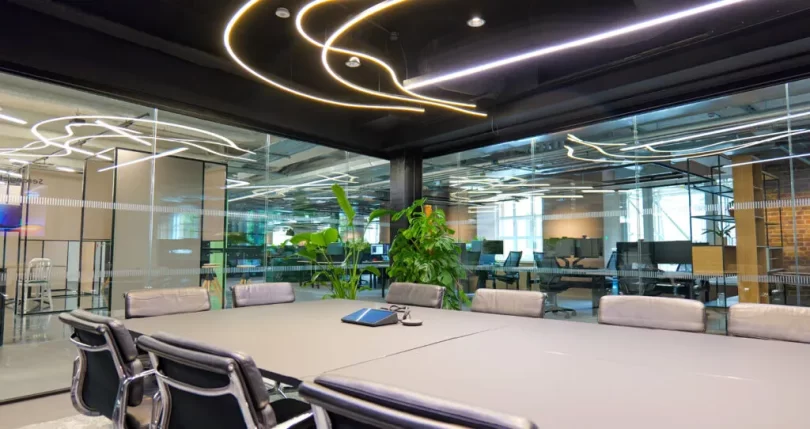

Walk into any office, and you’ll feel it straight away—something unspoken, yet unmistakable. The furniture arrangement, the play of natural light, the quiet hum of activity… All these elements, stitched together, create an atmosphere that speaks volumes before a single word is uttered.
In places like Ahmedabad—an emerging business hub brimming with ambition—this silent language is shaping more than just aesthetics. It’s influencing culture, productivity, and even the bottom line.
Contents
- 1 Why Interiors Speak Louder Than Words?
- 2 The Balance of Form and Function
- 3 Local Touches, Global Standards
- 4 Flexibility: The Buzzword That Means Business
- 5 Sustainability: A Responsibility, Not an Afterthought
- 6 The Human Factor: Conversation Over Catalogue
- 7 Ahmedabad’s Rise: A Testbed for Innovation
- 8 Final Thought: What’s Your Space Saying?
Why Interiors Speak Louder Than Words?
Why should a business care about the colour of a meeting room wall or the angle of a reception desk? Because these details don’t merely fill a space—they define it. An office is more than just a container for work; it’s a living, breathing expression of an organisation’s identity.
The best office interior designers in Ahmedabad understand this instinctively. They know that a well-designed space can do wonders—boosting morale, sparking creativity, and sending out the right signals to clients and collaborators alike. On the other hand, a poorly conceived office can stifle innovation and send the wrong message altogether.
The Balance of Form and Function
Of course, it’s not just about beauty. Looks alone won’t keep staff motivated when deadlines loom or when teams need to think fast and act faster. The real magic happens when design marries practicality.
Imagine an open-plan workplace where foot movement and conversation overwhelm focus. It is a touch too open. Alternatively, a “creative space” that is so eccentric; nobody feels comfortable really utilising it. These are productivity traps, not just design errors. A competent designer does not just choose finishes and materials. They interpret the minute motions and interactions of individuals into arrangements that make sense.
Local Touches, Global Standards
Another dimension in this discussion around Ahmedabad is geography and culture. From the ancient poles to the latest masterpieces of contemporary architecture, this city has a rich architectural legacy. For this reason, some of the most striking workplace designs here combine the ancient with the new: locally made accents with modern, global motifs.
Imagine a conference room with a classic textile panel—subtle yet a reference to the city’s textile past. Alternatively, a greeting area with a warm, grounded impression using locally sourced stone. These are not fads. These are strategies to respect the past and boldly enter the future.
Flexibility: The Buzzword That Means Business
How often have you heard it? “We’re flexible.” “We adapt.” But do offices themselves keep pace with these promises?
Flexible working is more than hot-desking or a ping-pong table in the corner. It’s about creating spaces that genuinely support different modes of work—quiet focus, quick huddles, deep dives into strategy. Spaces that can pivot with changing needs, without a fuss.
Little features like modular furniture, customisable spaces, and even basic lighting choices count. The finest designs are meant to grow, not just appear great in pictures.
Sustainability: A Responsibility, Not an Afterthought
To be honest, too many workplace designs still see sustainability as an add-on. In the kitchen, a recycling container. A couple of good-sized potted plants for scale. But real sustainability probes further.
Natural light saves electricity in addition to helping with mood enhancement. Local materials not only help local artists but also help to lower carbon footprints. And clever designs that maximise every square foot? For the earth as well as for the budget, they are better.
In newly developing centres like Ahmedabad, where new projects sprout up every day, the decisions taken today will reverberate for decades. Office interior designers with their finger on the pulse understand this—sustainability isn’t a fad. It’s a non-negotiable part of doing business responsibly.
The Human Factor: Conversation Over Catalogue
Here’s a little secret: the best designs don’t come from catalogues. They start with a conversation. With a client, with a team, sometimes even with a trusted friend over coffee. The aim isn’t just to fill a space with trendy furniture or fancy lighting. It’s to create an environment that feels right for the people who’ll spend hours within its walls.
Designers worth their salt know how to listen. They’ll ask awkward questions: “How do you really work? What frustrates you? What inspires you?” They’ll watch how teams gather, how they retreat to think, how they recharge. That’s where the real insights lie—in the day-to-day messiness of work, not in glossy lookbooks.
Ahmedabad’s Rise: A Testbed for Innovation
Let’s not lose sight of the bigger picture. Ahmedabad isn’t just another city—it’s a place brimming with ambition and possibility. As more industries stake their claim here, the expectations for workplaces will keep climbing. And with them, the silent power of interiors.
Office spaces in this city are no longer simply utilitarian. They’re brand statements. They’re commitments to employees’ well-being. And yes, they’re competitive advantages in a market that’s only getting busier.
Final Thought: What’s Your Space Saying?
So, what does this all boil down to? Perhaps it’s a simple question: what’s your office really saying? Does it tell clients you’re serious about your work, or does it whisper uncertainty? Does it give staff the tools—and the confidence—to do their best? Or does it quietly sap their energy, one overlooked detail at a time?
No matter how polished the corporate presentation, the office itself will always have the final word. In emerging business hubs like Ahmedabad, where growth is the name of the game, that silent language has never been more important.
For those willing to listen—and willing to invest—there’s a world of possibility in every square metre. All it takes is the courage to ask: “What message are we sending?” And the dedication to make sure it’s the right one.