
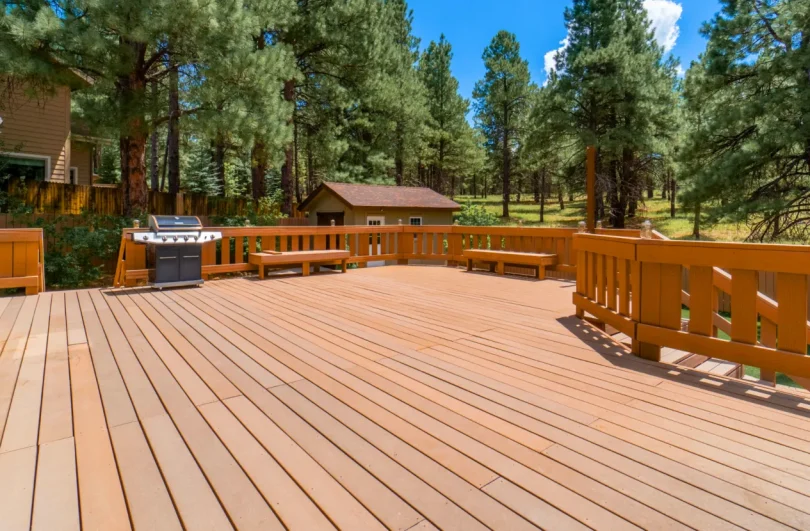

Building a durable, beautiful deck is one of the best ways to elevate your outdoor living space. Whether you’re planning a simple platform or a multi-level design, proper planning, high-quality materials, and professional craftsmanship are essential for success. Understanding the key steps and materials involved in deck contruction helps ensure your project will stand the test of time and withstand everyday wear, weather exposure, and regular foot traffic.
Contents
1. Start With a Solid Deck Design and Plan
The first step in any successful deck project is thoughtful planning. This includes determining the deck’s size, layout, and placement on your property. Consider how you plan to use the space—whether for dining, entertaining, or relaxing—and factor in local building codes, HOA requirements, and property boundaries.
A detailed plan also ensures accurate material estimates and helps you avoid costly mistakes during the construction phase.
2. Choose the Right Foundation and Footings
Strong foundations are the backbone of long-lasting deck contruction. The footing system supports the entire structure, making it crucial to choose materials that can handle soil movement, moisture, and temperature changes.
Most decks rely on concrete footings, poured either in forms or installed as precast pier blocks. Deeper footings are often recommended in colder climates to prevent frost heave. Ensuring proper depth, placement, and spacing keeps the deck stable and prevents sagging or shifting over time.
3. Select High-Quality Framing Materials
The framing is the structural skeleton of the deck. Pressure-treated lumber is the most common choice for beams and joists because it resists rot, moisture, and insects. When selecting framing materials, look for boards rated for ground contact if they will be near the soil.
Proper joist spacing, typically 12 to 16 inches apart, also contributes to deck longevity. Reinforced ledger boards, flashing, and secure connectors all play vital roles in preventing water damage and ensuring a safe, sturdy deck.
4. Choose the Right Decking Material
Your choice of decking boards greatly affects both the appearance and lifespan of the deck. Popular options include:
- Pressure-treated wood: Affordable and versatile, though it requires regular maintenance.
- Cedar or redwood: Naturally resistant to decay and insects, offering rich color and character.
- Composite decking: Made from recycled materials, highly durable, low-maintenance, and resistant to fading, mold, and warping.
- PVC decking: Lightweight, extremely weather-resistant, and ideal for high-moisture environments.
Selecting the right material for your climate, budget, and preferences is crucial for long-lasting performance.
5. Install Proper Hardware and Fasteners
Quality hardware ensures your deck remains safe and secure for years. Galvanized or stainless steel fasteners prevent rust and corrosion. Hidden fastener systems offer a clean, smooth surface while reducing wear on decking boards.
Additionally, structural connectors—such as joist hangers, post anchors, and ledger screws—must meet building code requirements and provide long-term strength.
6. Add Railings, Stairs, and Safety Features
Railings and stairs not only complete the look of your deck but also enhance safety. Options include wood, metal, composite, and cable railing systems. Proper measurements and secure installation are essential to ensure stability and compliance with safety codes.
7. Seal, Stain, or Protect the Deck
To maximize lifespan, protecting your deck from the elements is a crucial final step. Wood decks benefit from sealers or stains that repel moisture and block UV damage. Composite and PVC decks require minimal upkeep but still benefit from occasional cleaning to maintain appearance and durability.
A well-executed deck contruction project requires careful planning, durable materials, and professional installation. By understanding the steps and choosing the right components, you can create a deck that delivers beauty, strength, and long-lasting performance for many years to come.