
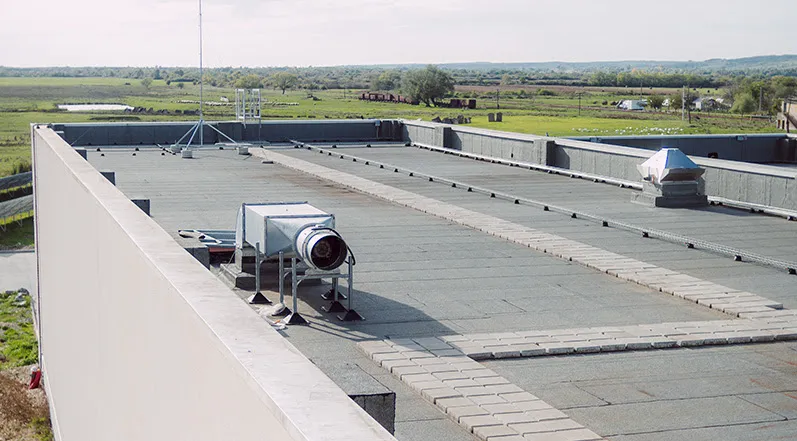

Warehouse facilities across Central and Western Ohio often face standing water on flat roofs after steady rain or rapid snowmelt. Large roof areas, shallow slopes such as 1/8 inch per foot, and aging interior drains make it difficult for water to move off the surface quickly. When water sits for more than 48 hours, the added weight increases structural stress and accelerates membrane wear.
For owners and facility managers, recurring ponding is a clear performance signal rather than a minor maintenance annoyance. Trapped moisture can saturate polyisocyanurate insulation, reduce thermal resistance, and contribute to gradual deck deflection. Confirming the source—slope loss, insulation compression, or undersized drainage—provides a practical starting point for corrections aligned with Ohio freeze-thaw conditions and current rainfall intensity patterns.
Contents
Why Ponding Water Keeps Returning
Roof areas that stretch more than 100 feet with little or no taper tend to form low pockets as the building settles and materials compress. In Ohio warehouses, recurring ponding usually comes from slope limits, insulation settlement, or drainage that cannot keep up, not just leaves or gravel near a drain. When those conditions combine, the same spots collect water after each storm and stay wet long after the rest of the roof dries.
A qualified roofing company in Columbus Ohio typically checks roof pitch, drain spacing, and how deep the water sits after a rain before suggesting repairs. Measuring post-storm depth matters because water that stays deeper than 1/2 inch after 48 hours increases structural stress and speeds membrane breakdown. Clear data from these checks helps owners choose the right correction for the roof’s actual weak points.
Hidden Structural Contributors
Recurring ponding in identical locations often indicates substrate deterioration beneath the membrane surface. Core samples can reveal saturated ISO insulation with compressive strength reduced below its original 20 psi rating. Once insulation absorbs moisture, it loses rigidity and allows localized depressions that retain additional water after each precipitation cycle.
Steel deck deflection also contributes, particularly in buildings with wide joist spacing or decades of cumulative snow loads. Even a 1/4 inch dip between supports can redirect runoff toward a single point. Correcting deck irregularities restores uniform load distribution across structural members and reduces long-term strain on connections.
Membrane Systems That Handle Ohio Weather
Ohio temperature swings range from sub-zero winter conditions to summer surface temperatures exceeding 150°F on dark membranes. Prolonged moisture contact increases seam stress and can accelerate plasticizer migration in lower-grade materials. Membranes installed on large warehouse decks must tolerate ultraviolet exposure and intermittent standing water without premature cracking.
Reinforced 60 mil TPO offers puncture resistance above 300 pounds per square inch, supporting frequent service traffic near rooftop units. EPDM maintains flexibility below 20°F, limiting cold-weather splitting along seams. Selecting materials rated for ponding conditions supports manufacturer warranty compliance and clarifies expected performance benchmarks over a 20-year cycle.
Drainage Upgrades With Immediate Impact
Interior roof drains and leaders in older Ohio warehouses are often sized for lighter storm loads than what today’s downpours deliver. When a 3-inch line can’t move water fast enough, ponding forms around the drain bowl and spreads across low areas. In many cases, targeted drainage work fixes the bottleneck without a full tear-off, especially when the membrane is still in workable condition.
Overflow scuppers set 2–3 inches above the primary drain give water a controlled exit when the main drain is overwhelmed, reducing the chance of deep ponding during peak rain. Upsizing interior drain lines from 3-inch to 4-inch diameters can raise runoff capacity and shorten the time water sits on the roof. Better flow lowers deck load weight and cuts membrane fatigue at seams and flashing edges.
Ongoing Maintenance That Protects Assets
Scheduled inspections each spring and fall help identify minor drainage restrictions before they escalate. Snow loads common in northern counties can shift insulation and stress drain bowls, creating subtle depressions. Maintenance reviews should include checking strainers, testing leader flow, examining flashing seams, and documenting any soft areas detected underfoot.
Infrared moisture scans and capacitance testing locate trapped insulation moisture before interior staining appears. Mapping wet zones allows targeted replacement instead of broad tear-offs that disrupt operations. Maintaining a detailed log of ponding depth, repair dates, and inspection findings supports data-driven budgeting and measurable performance tracking year over year.
Managing ponding water on Ohio warehouse roofs comes down to identifying root causes and applying practical, measurable corrections. Addressing slope loss, stabilizing insulation and decking, selecting membranes rated for temperature extremes, and upgrading drain capacity all work together to reduce standing water duration. Residual depth readings, moisture scans, and hydraulic calculations provide clear guidance for planning improvements. Standing water represents added structural load and accelerated material wear, not a minor surface issue. Consistent inspections and documented maintenance keep performance predictable, extend service life, protect stored inventory, and support stable long-term operating costs.