
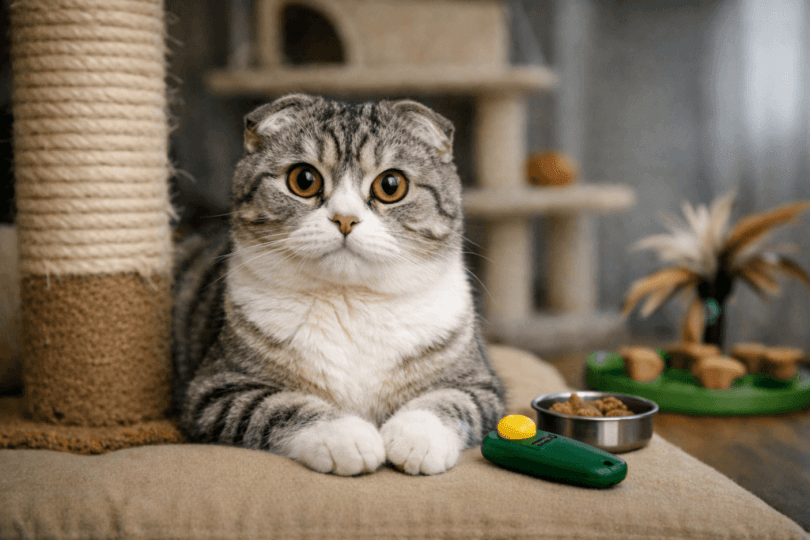

Few breeds attract more curiosity than the Scottish Fold. The folded ears and rounded face create an instantly recognizable appearance, but the breed’s real draw is temperamental: genuinely calm, people-oriented, and deeply attached to their families. That combination makes them excellent companions for first-time and experienced owners alike – provided the owner understands what raising one actually involves.
A Scottish Fold kitten is a domestic cat defined by a naturally occurring dominant mutation in the TRPV4 gene that causes the ear cartilage to fold forward, combined with a gentle, adaptable personality and specific health considerations that every new owner should understand before bringing one home.
Contents
- 1 Why Do People Choose Scottish Fold Kittens?
- 2 What Should You Know Before Scottish Fold Adoption?
- 3 How Do You Prepare Your Home for a Scottish Fold Kitten?
- 4 How Do You Raise a Scottish Fold Kitten Well?
- 5 What Are the Key Care Requirements for Scottish Fold Kittens?
- 6 What Is It Like Living With a Scottish Fold Long-Term?
- 7 What Every New Scottish Fold Owner Should Remember
- 8 Frequently Asked Questions
- 8.1 What should I prioritize when looking for a Scottish Fold kitten for adoption?
- 8.2 How do I help my Scottish Fold kitten adjust to its new home?
- 8.3 What are the most important health checks for Scottish Fold kittens in the first year?
- 8.4 Are Scottish Fold kittens good for families with young children?
- 8.5 How often does a Scottish Fold kitten need to see a vet?
Why Do People Choose Scottish Fold Kittens?
Scottish Fold kittens stand out for a combination of traits that few breeds replicate. According to PetMD’s veterinary breed profile, Dr. Primrose Moss, VetMB, MRCVS, describes them as cats that enjoy their owner’s company without constant attachment – settling nearby, initiating contact on their own terms, and bonding deeply with one or two people while remaining approachable with others.
They adapt well to apartments, family homes, multi-pet setups, and households with children. Their calm temperament reduces the adjustment period compared to more reactive breeds, and their measured playfulness – wand toys, puzzle feeders, short interactive sessions – makes them manageable for owners who cannot meet the demands of higher-energy cats.
One important qualification: the same gene that produces the folded ears also creates a progressive joint condition that every prospective owner must understand before deciding whether Scottish Fold adoption is right for them.
What Should You Know Before Scottish Fold Adoption?
Understanding the Health Foundation
The TRPV4 gene mutation responsible for the fold also causes osteochondrodysplasia (SFOCD) – a degenerative condition affecting the cartilage and bones of the distal limbs, tail, and joints. According to the Universities Federation for Animal Welfare (UFAW), all Scottish Fold cats carrying at least one copy of this gene develop SFOCD to some degree. Homozygous cats (two copies) develop severe, early-onset disease; heterozygous cats (one copy) present more mildly but still develop arthritis over time.
The difference between a well-bred and a poorly bred Scottish Fold is not whether SFOCD is present – it is how severe the presentation is likely to be. Responsible Scottish Fold adoption means sourcing from a breeder who:
- Pairs Fold-eared cats exclusively with straight-eared Scottish Straights – never Fold-to-Fold
- Provides vaccination records, deworming history, and the kitten’s genetic fold status
- Releases kittens at 12 to 16 weeks
- Offers a written health guarantee of at least one year
- Discusses osteochondrodysplasia openly and explains its recommended monitoring protocol
Buyers prioritizing temperament over appearance should also consider a Scottish Straight – the straight-eared kitten from the same litters – which carries none of the SFOCD risk and shares the identical personality profile.
What Scottish Fold Adoption Actually Costs
From reputable U.S. breeders, Scottish Fold kittens typically range from $1,000 to $3,000. Rescue and shelter adoption runs $100 to $500. Budget additionally for an initial vet visit ($100 to $200), annual wellness care, and potential specialist costs given the breed’s joint predisposition.
How Do You Prepare Your Home for a Scottish Fold Kitten?
Confine the kitten to one quiet room for the first few days – food, water, litter box, bed, and a few toys – before allowing gradual access to the rest of the home. Most well-socialized kittens establish consistent feeding, play, and sleep patterns within seven to fourteen days.
If other pets are present, keep them separated for three to five days and exchange bedding before any visual contact. Feed them on opposite sides of a closed door, then progress to supervised face-to-face introductions. Gradual introductions consistently produce better long-term outcomes than immediate access, regardless of how sociable either animal appears.
How Do You Raise a Scottish Fold Kitten Well?
Early Socialization: The Most Valuable Investment
The window between 8 and 16 weeks is the most influential period in a kitten’s behavioral development. Scottish Fold kittens handled regularly and given positive experiences during this window develop into markedly more confident, adaptable adults.
Practical steps:
- Handle the kitten daily – examine paws, look in ears, touch the tail. Kittens accustomed to this tolerate grooming and vet visits far more easily as adults.
- Introduce new people one at a time and let the kitten approach at its own pace.
- Expose to household sounds gradually – appliances, visitors, outdoor noise – avoiding sudden loud events in the first two weeks.
- Begin grooming routines immediately. Weekly brushing for shorthairs, daily for longhairs, introduced early becomes a non-event as adults.
- Introduce the carrier as a neutral space with bedding inside so the kitten associates it with comfort, not just vet trips.
Establishing Daily Routines
Consistent feeding times, predictable play sessions, and a stable sleep environment reduce stress-related behavioral problems and support the social bonding Scottish Folds are known for. Measure portions at set meal times rather than free-feeding – weight management is a meaningful factor in joint health across this breed’s lifespan.
What Are the Key Care Requirements for Scottish Fold Kittens?
Nutrition
Feed Scottish Fold kittens high-quality kitten food with named protein as the first ingredient through the first 12 months, then transition gradually to adult food. Scottish Folds are prone to obesity given their moderate activity level – measure portions, avoid free-feeding, and review weight targets with your veterinarian annually.
Grooming
| Coat Type | Brushing Frequency | Key Focus Areas | Professional Grooming |
| Shorthair | Once weekly | Loose hair removal | Not typically required |
| Longhair | Daily | Under arms, belly, collar, hindquarters | Every 8-12 weeks |
Ear care is essential regardless of coat type. The folded structure reduces airflow, making wax buildup and infection more likely. Clean gently every two weeks with a vet-approved solution and a cotton ball – never insert anything into the ear canal. Odor, discharge, or increased head-shaking warrants a veterinary visit.
Exercise and Enrichment
Two 15-minute interactive play sessions daily provide adequate stimulation without overexerting joints. Cat trees with accessible lower platforms satisfy the instinct to observe from height without requiring large jumps. As the cat ages, gradual avoidance of elevated areas is often the earliest observable sign of increasing joint discomfort.
What Is It Like Living With a Scottish Fold Long-Term?
Scottish Fold kittens grow into calm, loyal cats that integrate into household rhythms without significant disruption. They prefer to be in the same room as their owners rather than always on them – present without being demanding. They are patient with children and tolerant of other animals when properly introduced.
The breed’s characteristic “Buddha sit” – hind legs stretched forward, front paws on the belly – appears throughout the cat’s life and consistently delights owners. In a healthy, well-managed cat it is simply a quirk. A change in how readily the cat exits that posture is worth noting.
What Every New Scottish Fold Owner Should Remember
Raising Scottish Fold kittens well comes down to three things: sourcing from a responsible breeder who pairs Folds with Straights and provides full health documentation; establishing socialization and grooming routines during the critical 8 to 16-week window; and building the veterinary habits – weight management, joint monitoring, cardiac screening from age 5 – that the breed genuinely requires.
The temperament that makes Scottish Folds so appealing develops from consistent care and an owner attentive enough to notice when something is off. That investment is modest compared to what the breed returns over a 12 to 15-year relationship – and for owners who go in informed, it is consistently worth it.
Frequently Asked Questions
What should I prioritize when looking for a Scottish Fold kitten for adoption?
Focus on breeders who pair Fold-eared cats only with Scottish Straights and provide vaccination history, genetic fold status, and a written health guarantee. Any seller unwilling to discuss osteochondrodysplasia directly should be removed from consideration – it affects all folded-ear Folds, and transparency about it is a minimum standard of responsible practice.
How do I help my Scottish Fold kitten adjust to its new home?
Confine the kitten to one quiet room for the first few days, then expand access gradually as it settles. Introduce family members and other pets one at a time at the kitten’s pace. Establish feeding times and play routines within the first week – consistency creates the security Scottish Fold kittens respond to best.
What are the most important health checks for Scottish Fold kittens in the first year?
Schedule an initial wellness visit within 48 to 72 hours of arrival. The first year should cover the full vaccination series, deworming, parasite prevention, and a spay or neuter consultation. Ask your vet to assess joint and tail mobility at the baseline exam – early radiographic changes from osteochondrodysplasia can appear as young as 7 weeks.
Are Scottish Fold kittens good for families with young children?
Yes – their calm, patient temperament makes them one of the more family-compatible pedigree breeds. Teach children gentle handling from the start: slow approaches, no forced holds, no pulling the coat or tail. Rough handling adds stress to joints the cat is already managing, so appropriate contact is both a welfare and a practical consideration.
How often does a Scottish Fold kitten need to see a vet?
Expect four to five visits in the first year for the vaccination series, wellness checks, and spay or neuter. From year two, twice-yearly exams are appropriate given the breed’s joint and cardiac predispositions. From age 5, add cardiac auscultation and a joint mobility assessment to each annual visit.