
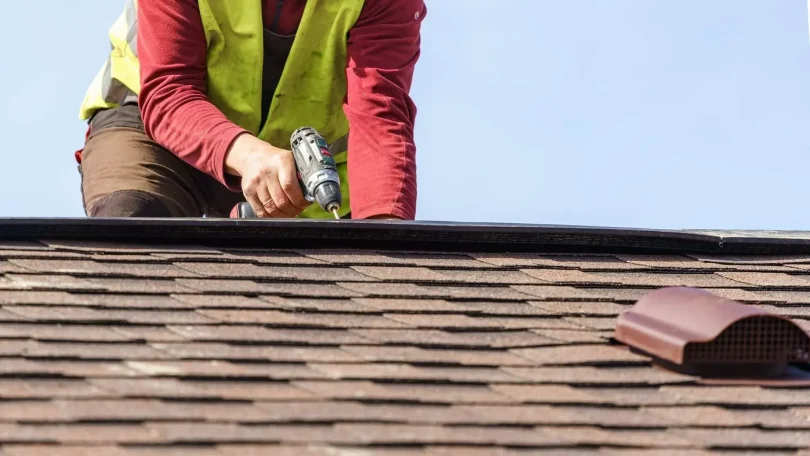

Deciding between a repair and a full roof replacement is one of the more consequential home maintenance decisions a homeowner will face, largely because the cost difference between the two options is significant and the wrong call in either direction can be expensive.
- Your roof is approaching or past its expected lifespan for its material type
- Shingles are curling, cracking, or missing across large sections rather than isolated spots
- You can see daylight through the roof boards from inside the attic
- There’s sagging anywhere along the roofline
- Granules from asphalt shingles are collecting heavily in gutters
- Multiple leaks have occurred in different areas over a short period
- Previous repairs haven’t resolved recurring issues in the same area
- Energy bills have increased noticeably, suggesting declining insulation performance
Age is one of the most reliable indicators, even when a roof doesn’t show obvious visible damage. Asphalt shingle roofs typically last between twenty and twenty-five years, while other materials like metal or tile can last considerably longer. A roof nearing the end of its expected lifespan is increasingly likely to develop new problems even after a repair, since the underlying materials are simply wearing out across the board rather than failing in one isolated spot.
Widespread shingle damage, as opposed to a handful of isolated damaged shingles, is another strong signal that replacement makes more sense than repair. If curling, cracking, or missing shingles are spread across multiple sections of the roof rather than concentrated in one area, this usually indicates the entire roofing material has reached the end of its useful life rather than experiencing isolated wear from a specific incident like a fallen branch.
Visible daylight through the attic, or noticeable sagging anywhere along the roofline, are more serious signs that shouldn’t be delayed. Sagging in particular can indicate structural issues with the decking beneath the shingles, which is a more significant problem than surface-level shingle damage and typically requires a fuller assessment before deciding on next steps.
Recurring leaks are one of the clearer signals that a repair-only approach isn’t solving the underlying problem. If the same area has needed repair more than once within a relatively short period, or if leaks are appearing in multiple different locations, this pattern usually points to broader material failure rather than a single, isolated issue that a targeted repair can fully resolve.
An experienced team of roofers can typically assess these factors together, rather than looking at any single sign in isolation, and provide a clearer picture of whether a repair will realistically extend the roof’s useful life or whether it’s more of a short-term patch on a system that needs full replacement in the near future regardless.
Cost is understandably a major factor in this decision, but it’s worth thinking about total cost over time rather than just the upfront number. Repeated repairs on an aging roof can eventually add up to a significant portion of a full replacement cost, without ever actually solving the underlying issue, which is why an honest assessment of the roof’s overall condition, not just the specific problem prompting the current inspection, tends to lead to a better long-term financial decision.
Getting a second opinion before committing to a major replacement is generally worthwhile, particularly if the first assessment recommends full replacement for a roof that still seems to be functioning reasonably well. A second, independent inspection can either confirm the original recommendation or reveal that a more targeted repair is actually a reasonable option, giving homeowners more confidence in whichever direction they ultimately choose.
Homeowners planning to sell within the next few years should also factor buyer perception into this decision. An aging roof nearing the end of its life often comes up during a home inspection regardless, and addressing it proactively, on your own terms, tends to be less stressful and often less costly than negotiating a credit or repair during an active sale.