
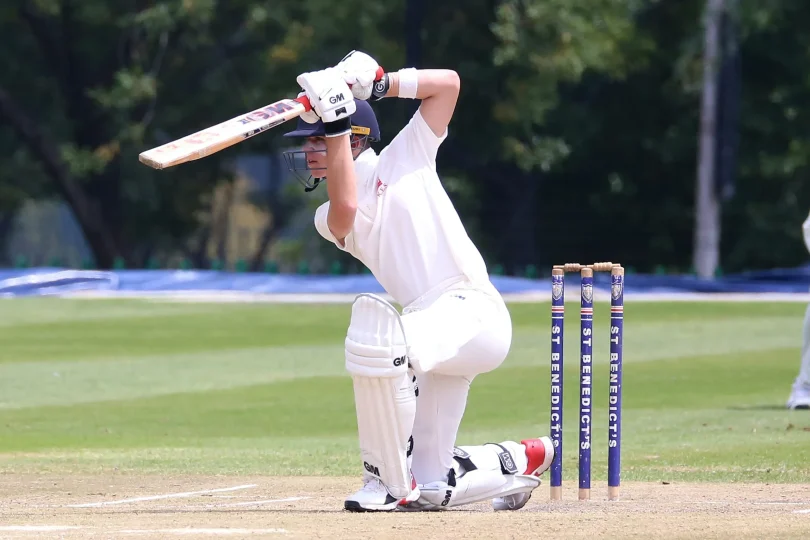

Batting control is one of the most important skills in cricket. Power matters, but control decides whether a batter can handle swing, spin, pace changes, field placements, and pressure situations.
A controlled batter does not simply hit harder. They manage balance, timing, shot selection, bat path, and footwork. They know when to attack, when to defend, and when to rotate the strike.
Better batting control comes from focused practice. Players need drills that improve decision-making as much as technique.
Contents
Start With a Stable Batting Stance
A good stance gives the batter balance before the ball is delivered. If the stance is too narrow, movement becomes unstable. If it is too wide, footwork becomes slow.
The feet should be slightly wider than shoulder width.
Weight should be balanced, not locked on the heels.
The head should stay still, with eyes level and focused on the bowler’s release point.
Hands should feel relaxed, not tight.
A tense grip can reduce bat control and make the swing less responsive.
Small setup errors can affect every shot that follows.
Improve Grip and Bat Face Control
Grip affects how the bat comes through the line of the ball. A poor grip can close or open the bat face too early, leading to edges, mistimed shots, or poor placement.
The top hand should guide control.
The bottom hand should support power without dominating the swing.
Players should practice presenting a straight bat during defensive shots, drives, and soft-handed deflections.
For teams working on consistent training standards, custom cricket jerseys can help create a more organized setup for practice sessions, matches, and club development programs.
Good batting control also depends on comfort.
Training gear should allow full shoulder rotation, quick running, and unrestricted movement at the crease.
Train the Head to Stay Still
Head position is central to batting control. When the head falls over, pulls away, or moves too early, the body usually follows. This affects timing and balance.
A still head helps the batter watch the ball longer.
It also keeps the body aligned through the shot.
One useful drill is the pause drill.
The batter takes a normal setup, receives throwdowns, and freezes for two seconds after contact.
This shows whether the body stayed balanced.
If the batter falls forward, backward, or sideways, the shot was not controlled.
The goal is to finish each shot in a stable position.
Use Footwork Drills for Better Positioning
Footwork helps the batter get closer to the ball. Good foot movement reduces reaching, improves balance, and allows cleaner contact.
Front-foot shots need a decisive stride toward the pitch of the ball.
Back-foot shots need quick movement onto the back leg while keeping the head aligned.
Footwork Drills to Practice
Useful drills include:
- Shadow batting with foot targets
- Cone-based front-foot drives
- Back-foot punch practice
- Drop-feed driving drills
- Spin footwork with markers
- Forward defense repetitions
- Step-and-hold balance drills
- Single-ball decision drills
- Net sessions with specific scoring zones
Footwork should be trained slowly before adding pace.
Speed without control creates bad habits.
Build Better Shot Selection
Controlled batting depends on choosing the right shot for the right ball. A technically strong player can still struggle if they attack the wrong delivery.
Players should train decision-making in nets.
Instead of hitting every ball, set clear rules.
Leave wide balls.
Defend straight balls early in the session.
Attack only when the ball is in a target scoring zone.
This teaches patience and discipline.
Batters should also learn their strongest scoring areas.
A player who knows their best shots can build innings with less risk.
Shot selection improves when practice has consequences.
For example, count an edge, false shot, or missed drive as a lost wicket during training.
Practice Soft Hands
Soft hands help batters control edges, absorb pace, and guide the ball into gaps. This is especially useful against seam movement, bounce, and spin.
A tight grip often sends edges carrying to fielders.
A softer grip can drop the ball closer to the pitch.
Practice soft-hand defense against throwdowns or bowling machine deliveries.
Focus on relaxing the hands at impact.
Let the ball meet the bat instead of forcing the shot.
Soft-Hands Training Cues
Useful cues include:
- Relax the bottom hand
- Watch the ball late
- Keep the bat face straight
- Play under the eyes
- Let the ball come
- Finish with balance
- Avoid pushing hard
- Keep the head still
- Control the follow-through
This skill is important for longer innings and difficult pitch conditions.
Learn to Rotate the Strike
Batting control is not only about boundaries. Good players can score singles and twos without taking high risks.
Strike rotation keeps the scoreboard moving and reduces pressure.
Practice hitting into open spaces.
Use drop-and-run drills, controlled nudges, late cuts, and deflections.
Place cones in scoring zones and reward accurate placement.
Batters should learn to read field positions before the ball is bowled.
This makes decision-making faster.
A controlled single can be as valuable as a risky boundary attempt.
Train Against Spin With Purpose
Spin bowling tests footwork, patience, and bat control. Batters should not rely only on sweeping or charging.
Practice moving forward to smother spin.
Practice going back when the ball is short.
Work on playing with the spin and against the spin only when balanced.
Use drills where the batter must decide between defense, single, and attacking shot.
Do not premeditate every ball.
The best players adjust after reading length and line.
Controlled batting against spin comes from using the feet without losing shape.
Final Thoughts
Better batting control comes from stable basics, strong footwork, soft hands, smart shot selection, and regular review.
Players should train with clear goals instead of simply hitting balls in the nets.
A controlled batter understands their scoring areas, respects good deliveries, and uses technique to reduce risk.
With consistent practice, batters can improve timing, placement, balance, and confidence at the crease.