
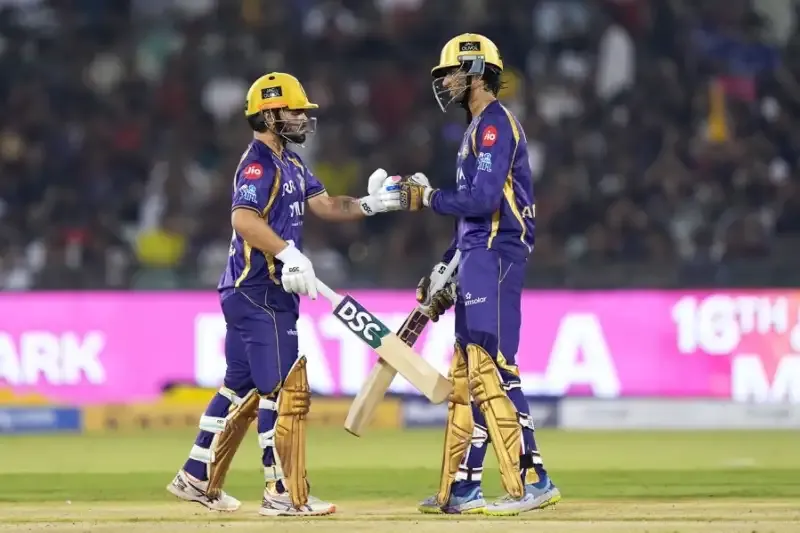

The Kolkata Knight Riders vs Royal Challengers Bengaluru match scorecard tells the story of a high-scoring Indian Premier League contest in which Royal Challengers Bengaluru chased down a challenging target with four wickets in hand. Played on May 13, 2026, at the Shaheed Veer Narayan Singh International Stadium in Raipur, the Match 57 encounter delivered aggressive batting, important partnerships and a memorable century from Virat Kohli.
Kolkata Knight Riders posted 192/4 in their allotted 20 overs before Royal Challengers Bengaluru reached 194/4 in 19.1 overs, winning by six wickets. Kohli remained unbeaten on 105 from 60 deliveries, while Devdutt Padikkal contributed 39 runs to the successful chase. These performances made the fixture a compelling example of how controlled aggression can overcome a substantial first-innings total.
For supporters, analysts and fantasy cricket followers, the Kolkata Knight Riders vs Royal Challengers Bengaluru match scorecard offers more than the final numbers. It highlights the value of partnerships, the consequences of missed bowling opportunities and the importance of maintaining scoring momentum throughout a T20 innings.
Contents
- 1 Overview of the Match: Essential Details Behind the Contest
- 2 Innings Breakdown and Key Performances: How the Runs Accumulated
- 3 Detailed Scorecard Analysis: Individual Contributions and Team Efficiency
- 4 Match Turning Points and Strategic Insights: Why Bengaluru Won
- 5 Post-Match Summary and Implications: What the Result Means
- 6 Conclusion: Key Lessons from the 2026 KKR vs RCB Encounter
Overview of the Match: Essential Details Behind the Contest
Understanding the setting helps explain how both teams approached this important league fixture. The venue, Kolkata Knight Riders vs Royal Challengers Bengaluru Match Scorecard toss decision and playing conditions shaped the contest before the first ball was delivered.
Match Details and Venue
The match was the 57th fixture of the 2026 Indian Premier League season. Raipur hosted the contest at the Shaheed Veer Narayan Singh International Stadium, providing a neutral setting for the two franchises.
| Match information | Details |
|---|---|
| Tournament | Indian Premier League 2026 |
| Match number | 57 |
| Date | May 13, 2026 |
| Venue | Shaheed Veer Narayan Singh International Stadium, Raipur |
| Kolkata Knight Riders | 192/4 in 20 overs |
| Royal Challengers Bengaluru | 194/4 in 19.1 overs |
| Result | RCB won by six wickets |
| Player of the Match | Virat Kohli |
The Kolkata Knight Riders vs Royal Challengers Bengaluru match scorecard reflects an entertaining battle between Kolkata’s batting depth and Bengaluru’s ability to build a successful chase around an experienced top-order batter.
The result also demonstrated why first-innings totals around 190 can remain vulnerable when the chasing side has established batters capable of controlling the required run rate.
Toss Outcome and Decision
Royal Challengers Bengaluru won the toss and elected to bowl first. This decision gave the team an opportunity to assess Kolkata’s scoring patterns before beginning the chase.
The strategy proved effective in the context of the final result. Although Kolkata accumulated 192 runs, Bengaluru’s batters knew the exact target and could structure their innings around the required rate.
Chasing teams must balance early aggression with wicket preservation. Bengaluru achieved that balance sufficiently well, allowing Kohli to build his innings without forcing an increasingly desperate finish.
Pitch and Weather Conditions Kolkata Knight Riders vs Royal Challengers Bengaluru Match Scorecard
Kolkata Knight Riders vs Royal Challengers Bengaluru Match Scorecard The published match information described the conditions as partly cloudy, with temperatures around 32°C. The surface was characterized by pace and bounce, while the overall batting conditions were rated average.
Such conditions can reward batters who time the ball cleanly and bowlers who use changes of pace intelligently. A surface offering some bounce may also encourage attacking shots, particularly when batters can trust the ball to come onto the bat.
Kolkata adapted well enough to produce 192 runs. Bengaluru subsequently demonstrated that consistent shot selection and effective running between the wickets could make the target manageable.
Innings Breakdown and Key Performances: How the Runs Accumulated
The innings reveal two different approaches to building a competitive total. Kolkata spread its scoring across several contributors, whereas Bengaluru’s successful chase revolved around one outstanding individual performance supported by an important secondary partnership.
Kolkata Knight Riders Innings Summary
Kolkata Knight Riders finished on 192/4 from 20 overs at a run rate of 9.60. Angkrish Raghuvanshi led the batting effort with 71 from 46 balls, striking seven fours and three sixes. Rinku Singh added an unbeaten 49 from 29 deliveries, providing an aggressive finish.
Cameron Green contributed 32 from 24 balls, while captain Ajinkya Rahane scored 19 from 13 deliveries. Finn Allen made 18 from eight balls, offering an early burst of attacking intent.
These contributions gave Kolkata a competitive platform. Raghuvanshi anchored the middle overs, Green supported the innings, and Singh increased the scoring rate toward the end.
The Kolkata Knight Riders vs Royal Challengers Bengaluru match scorecard therefore illustrates the benefit of combining stability with acceleration. Kolkata did not depend entirely on one batter, and its four-wicket total provided a serious challenge for the opposition.
However, reaching 192 did not guarantee victory. The innings also created a strategic question for Kolkata’s bowlers: how could they prevent Bengaluru’s leading batters from settling into a sustained rhythm?
Royal Challengers Bengaluru Innings Summary
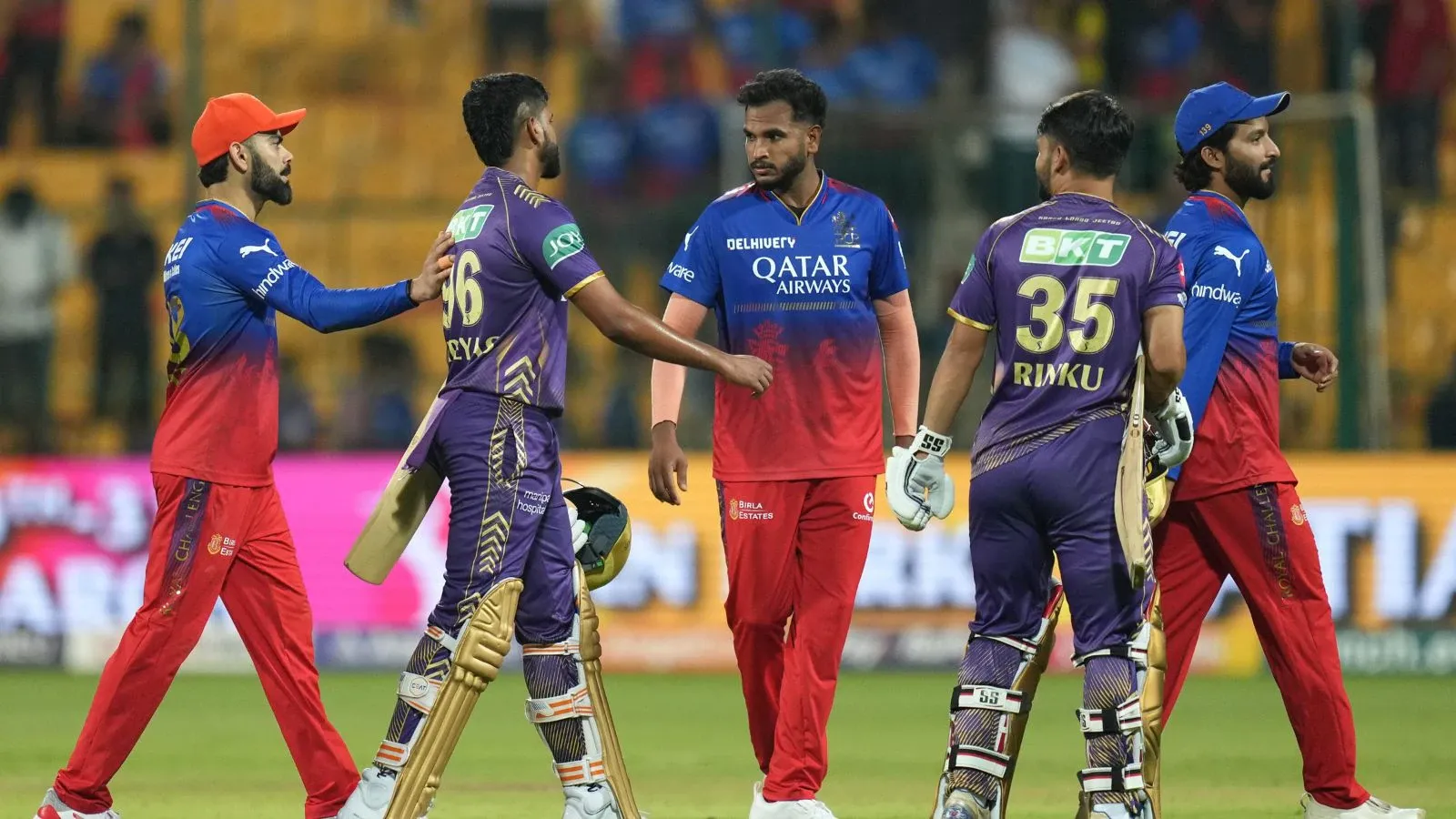
Kolkata Knight Riders vs Royal Challengers Bengaluru Match Scorecard responded with 194/4 in 19.1 overs, finishing with five balls remaining. The team maintained a scoring rate of approximately 10.12 runs per over.
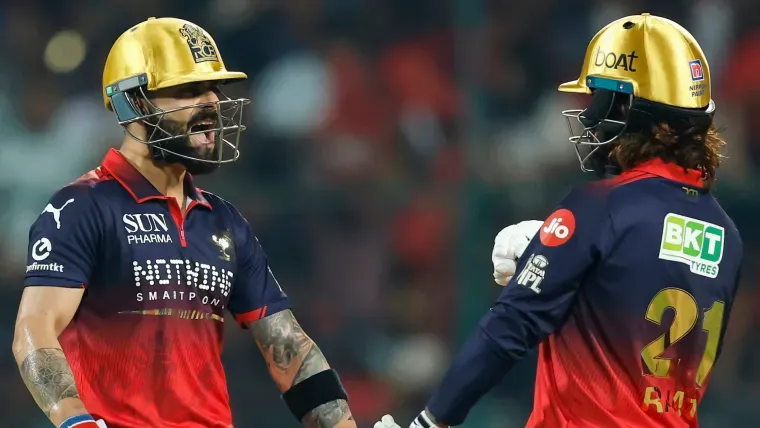
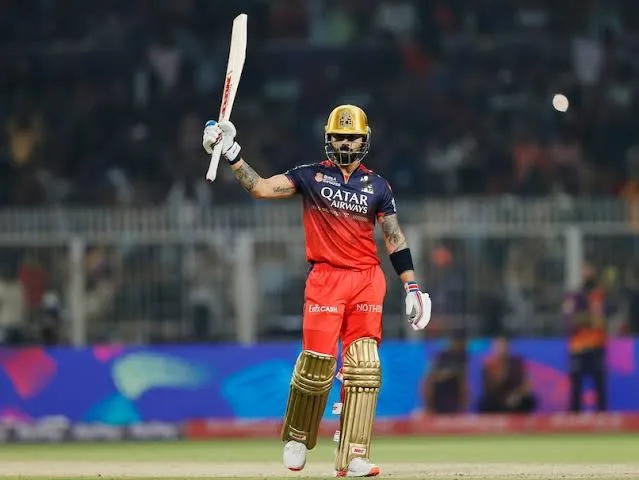
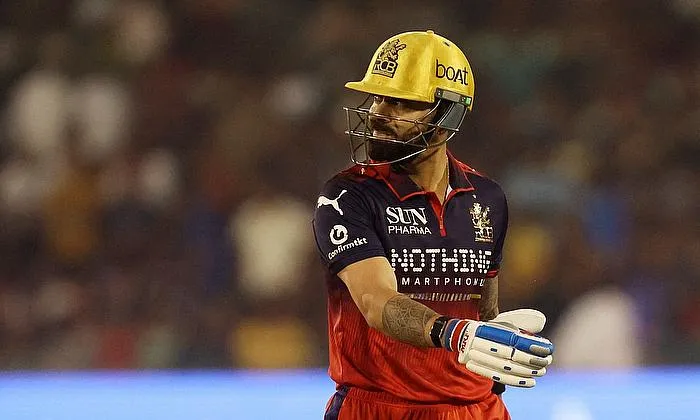
Virat Kohli was the decisive performer, scoring an unbeaten 105 from 60 balls. His innings included 11 fours and three sixes, combining boundary hitting with consistent accumulation.
Devdutt Padikkal supplied valuable support with 39 from 27 deliveries, including seven fours. Jacob Bethell scored 15 from 12 balls, while Rajat Patidar made 11 from eight deliveries.
Tim David contributed two runs before being dismissed, and Jitesh Sharma remained unbeaten on eight from five balls.
The Royal Challengers Bengaluru vs Kolkata Knight Riders match scorecard shows how Kohli’s innings gave the chase direction and stability. His ability to maintain the scoring rate meant that Bengaluru did not need a dramatic final-over recovery.
Top Batsmen and Their Contributions
Several batters influenced the contest, but their contributions differed in purpose and timing.
Raghuvanshi’s 71 was the foundation of Kolkata’s total. His innings helped the team recover from early dismissals and maintain pressure on Bengaluru’s bowlers. His combination of fours and sixes also ensured that Kolkata did not become overly dependent on singles.
Rinku Singh’s unbeaten 49 was equally important because it strengthened the final total. Scoring at approximately 168.97 runs per 100 balls, he converted the later overs into a productive finishing phase.
Kohli’s unbeaten century was the defining innings of the match. He reached 105 from 60 deliveries at a strike rate of 175.00, demonstrating both control and attacking intent. Padikkal’s 39 complemented that effort by helping Bengaluru establish momentum during the first half of the chase.
The Kolkata Knight Riders vs Royal Challengers Bengaluru match scorecard makes the contrast clear: Kolkata had two major contributors, while Bengaluru benefited from an exceptional individual performance that remained productive throughout the innings.
Leading Bowlers and Their Impact
Bengaluru’s bowling attack limited Kolkata to four wickets, although the home side’s batting depth enabled it to reach a substantial total Kolkata Knight Riders vs Royal Challengers Bengaluru Match Scorecard.
Kartik Tyagi, who played for Kolkata, later made a notable contribution with the ball by claiming three wickets during Bengaluru’s chase. His figures were four overs, 32 runs and three wickets, making him Kolkata’s most successful bowler in the second innings.
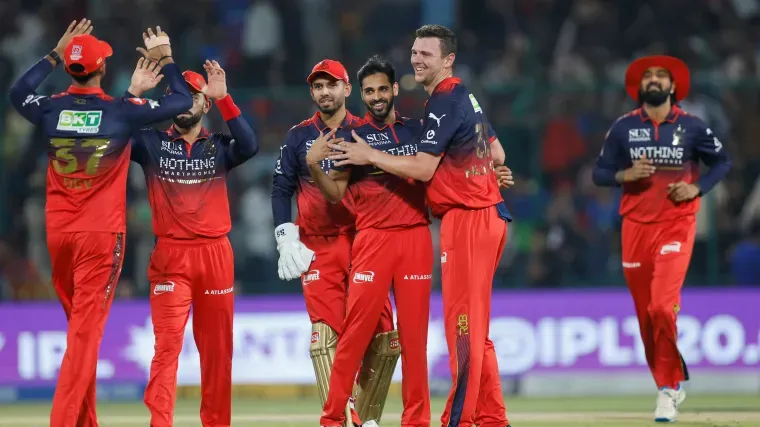
For Bengaluru, Josh Hazlewood and Bhuvneshwar Kumar took one wicket apiece during Kolkata’s innings. Sunil Narine also claimed a wicket, while the remaining bowling options faced the challenge of containing Raghuvanshi and Singh Kolkata Knight Riders vs Royal Challengers Bengaluru Match Scorecard.
Bowling economy becomes particularly important when defending a total near 200. A single expensive over can change the equation, especially when a set batter is already scoring freely.
Detailed Scorecard Analysis: Individual Contributions and Team Efficiency
The figures below help identify where each side gained an advantage and why Bengaluru ultimately completed the chase. Reading individual scores alongside the match result offers a clearer picture than examining totals alone.
Batting Scorecard: Individual Scores and Partnerships
Kolkata Knight Riders batting
| Batter | Runs | Balls | Fours | Sixes |
|---|---|---|---|---|
| Ajinkya Rahane | 19 | 13 | 3 | 1 |
| Finn Allen | 18 | 8 | 3 | 1 |
| Angkrish Raghuvanshi | 71 | 46 | 7 | 3 |
| Cameron Green | 32 | 24 | 3 | 1 |
| Rinku Singh | 49* | 29 | 3 | 2 |
| Total | 192/4 | 20 overs |
The asterisk indicates that Rinku Singh was not out.
Kolkata Knight Riders vs Royal Challengers Bengaluru Match Scorecard Raghuvanshi’s innings offered a mixture of placement and boundary hitting. His 71 runs helped stabilize the middle order while preserving the scoring rate. Green’s 32 ensured that the innings continued to progress, and Singh’s unbeaten contribution gave Kolkata a strong finish.
Royal Challengers Bengaluru batting
| Batter | Runs | Balls | Fours | Sixes |
|---|---|---|---|---|
| Jacob Bethell | 15 | 12 | 2 | 1 |
| Virat Kohli | 105* | 60 | 11 | 3 |
| Devdutt Padikkal | 39 | 27 | 7 | 0 |
| Rajat Patidar | 11 | 8 | 0 | 1 |
| Tim David | 2 | 3 | 0 | 0 |
| Jitesh Sharma | 8* | 5 | 1 | 0 |
| Total | 194/4 | 19.1 overs |
The asterisk indicates that the batter remained not out.
The Kolkata Knight Riders vs Royal Challengers Bengaluru match scorecard highlights the difference between the two batting approaches. Kolkata assembled a collective total, while Bengaluru’s chase was built around Kohli’s sustained scoring and Padikkal’s supporting role.
Kohli’s unbeaten century was particularly valuable because he remained at the crease until the target was reached. This removed the need for another batter to produce a similarly large innings under pressure.
Bowling Scorecard: Wickets Taken and Economy Rates
Bowling figures explain how the teams managed to create opportunities despite the high totals.
Royal Challengers Bengaluru bowling against Kolkata
| Bowler | Overs | Runs | Wickets |
|---|---|---|---|
| Bhuvneshwar Kumar | 4 | 39 | 1 |
| Josh Hazlewood | 4 | 32 | 1 |
| Jacob Duffy | 4 | 38 | 0 |
| Rasikh Salam | 4 | 39 | 0 |
| Krunal Pandya | 4 | 40 | 0 |
Kolkata Knight Riders bowling against Bengaluru
| Bowler | Overs | Runs | Wickets |
|---|---|---|---|
| Kartik Tyagi | 4 | 32 | 3 |
| Vaibhav Arora | 4 | 48 | 0 |
| Saurabh Dubey | 2.1 | 21 | 0 |
The displayed figures summarize the principal bowling contributions available from the match reports. Bowling totals can include additional details such as extras and deliveries not shown in abbreviated scorecards.
Kolkata Knight Riders vs Royal Challengers Bengaluru Match Scorecard Tyagi’s three wickets represented Kolkata’s most effective individual bowling performance. His figures showed that wicket-taking opportunities existed, even though the team could not stop Kohli from guiding the chase.
For Bengaluru, Hazlewood’s wicket and controlled spell helped limit Kolkata’s options at the top. The broader challenge was containing a batting lineup that accelerated through the middle and closing overs.
Fielding Highlights and Notable Catches
Fielding played an important role in the dismissal sequence. Rahane took catches to dismiss Bethell and Patidar, while other dismissals interrupted Kolkata’s attempts to build uninterrupted partnerships.
Kartik Tyagi’s contribution against Bengaluru also included his involvement in the dismissal of Bethell. These moments helped Kolkata maintain a degree of pressure during the chase.
However, successful fielding must be supported by sustained bowling discipline. Even a team that takes regular wickets can struggle if the leading batter continues to score at a high rate.
Bengaluru’s ability to preserve Kohli’s presence at the crease was decisive. The Kolkata Knight Riders vs Royal Challengers Bengaluru match scorecard ultimately records a result shaped not only by individual catches but also by the batting side’s capacity to respond after losing wickets.
Match Turning Points and Strategic Insights: Why Bengaluru Won
The final margin of six wickets suggests a chase that remained under control during its decisive stages. Three tactical areas stand out: the opening powerplay, the main partnership and the handling of pressure during the closing overs.
Critical Moments That Influenced the Outcome
Kolkata’s 192/4 established a demanding target, but Bengaluru’s early scoring prevented the required rate from becoming a major obstacle. The visitors reached 50 runs in 4.5 overs and completed the powerplay at 66/1.
This early momentum was crucial because it reduced the pressure on the middle order. Instead of chasing a rapidly rising target, Bengaluru could concentrate on maintaining its existing rhythm.
The partnership between Kohli and Padikkal then became the central feature of the chase. Padikkal’s 39 provided stability, while Kohli continued to score through a mixture of boundaries and calculated running.
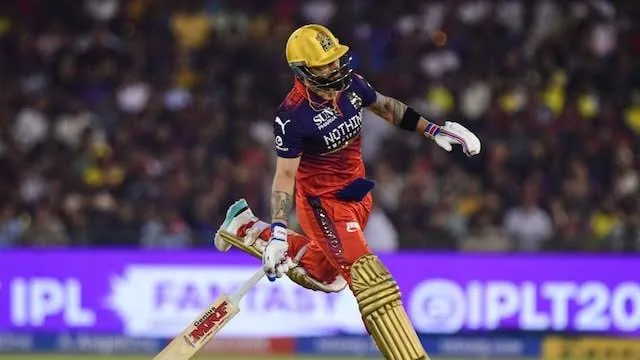
Another major moment came when Kohli reached his century. He completed the milestone in 58 balls and continued batting through the finish, turning a competitive contest into a successful chase.
Captaincy Decisions and Their Effectiveness
Royal Challengers Bengaluru’s decision to bowl first proved successful in retrospect. The team secured the opportunity to chase a defined target, and its batting lineup made effective use of the information available from Kolkata’s innings.
For Kolkata, the challenge was more complicated. The team needed wickets without allowing Kohli to dominate the scoring. Tyagi’s three dismissals provided a potential route back into the contest, but the bowling attack could not remove the batter who mattered most.
Captaincy in T20 cricket requires constant adjustments to match conditions. Field placements, bowling changes and the timing of specialist overs can influence the outcome, particularly when the opposition is scoring above ten runs per over.
The Royal Challengers Bengaluru vs Kolkata Knight Riders match scorecard demonstrates that taking wickets alone is not always enough. Teams must also control the scoring rate and prevent partnerships from rebuilding after each dismissal.
Impact of Powerplay and Death Overs Performances
The powerplay created an early advantage for Bengaluru. Reaching 66/1 after six overs meant the side had scored quickly while losing only one wicket.
Kolkata’s powerplay was also productive, with 56 runs scored alongside two dismissals. This allowed the innings to develop at a competitive pace, but the difference became evident during the chase when Bengaluru maintained greater consistency.
At the other end of the innings, Kolkata used Raghuvanshi and Singh to push the total to 192. Their contributions ensured that the target was substantial, yet Bengaluru continued to score efficiently in the closing stages.
Bengaluru reached 150 in 15.3 overs and finished the chase after 19.1 overs. These milestones show how a strong start can reduce the need for excessive late-innings risk.
For teams studying ipl kkr vs rcb, this match offers a useful lesson: aggressive powerplay batting works best when it is followed by a stable middle phase and a controlled finish.
Post-Match Summary and Implications: What the Result Means
The match produced an important result for both teams, but its significance extends beyond the immediate points gained or lost. Individual form, team balance and the ability to execute a plan under pressure all emerged as important themes.
Final Result and Margin of Victory
Royal Challengers Bengaluru defeated Kolkata Knight Riders by six wickets after reaching 194/4 in 19.1 overs. Kolkata’s 192/4 had appeared competitive, but Bengaluru completed the chase with five deliveries remaining.
The result demonstrated the value of maintaining a strong scoring rate throughout the innings. Bengaluru did not need to wait until the final over to accelerate because its early momentum had already established a favorable position.
Kolkata, meanwhile, could take encouragement from its batting performance while recognizing that the bowling unit needed a more effective response against established batters.
Player of the Match and Standout Performers
Virat Kohli was named Player of the Match after scoring an unbeaten 105 from 60 deliveries. His innings combined consistency with attacking intent and ensured that Bengaluru had a reliable presence throughout the chase.
Angkrish Raghuvanshi was Kolkata’s leading batter, contributing 71 runs. Rinku Singh’s unbeaten 49 also strengthened the first-innings total, while Cameron Green’s 32 provided another useful contribution.
Kartik Tyagi stood out among Kolkata’s bowlers with three wickets for 32 runs. His performance demonstrated the team’s ability to create opportunities, although those breakthroughs were insufficient to prevent the defeat.
These individual efforts make the Kolkata Knight Riders vs Royal Challengers Bengaluru match scorecard useful for evaluating player contributions in context rather than judging performances solely by the final result.
Implications for League Standings and Upcoming Fixtures
The result gave Royal Challengers Bengaluru a valuable league victory, while Kolkata Knight Riders were left to assess the difference between posting a strong total and defending it successfully.
Readers examining royal challengers bengaluru vs kolkata knight riders standings should distinguish between the result of this particular fixture and the full league table. A single victory can affect points and net run rate, but the exact standings depend on every team’s completed matches and results.
Likewise, kolkata knight riders vs royal challengers bengaluru standings is a useful search phrase for comparing the franchises’ relative positions. An accurate comparison should include matches played, wins, losses, points and net run rate rather than relying on one head-to-head result.
The Kolkata Knight Riders vs Royal Challengers Bengaluru match scorecard establishes that Bengaluru won this encounter, but it should not be treated as a complete standings table. Readers should consult the official IPL table for the latest ranking information and subsequent changes.
For upcoming fixtures, Bengaluru could build on Kohli’s form and its successful powerplay approach. Kolkata could focus on bowling plans against set batters, more effective use of variations and stronger control during the middle overs.
Conclusion: Key Lessons from the 2026 KKR vs RCB Encounter
The contest between Kolkata Knight Riders and Royal Challengers Bengaluru delivered a high-scoring match defined by contrasting batting contributions and a successful chase. Kolkata’s 192/4 was competitive, with Angkrish Raghuvanshi scoring 71 and Rinku Singh remaining unbeaten on 49.
Bengaluru responded with 194/4 in 19.1 overs, winning by six wickets. Virat Kohli’s unbeaten 105 and Devdutt Padikkal’s 39 provided the foundation for a chase that maintained momentum from the opening overs.
The Kolkata Knight Riders vs Royal Challengers Bengaluru match scorecard captures the central lesson of the match: a substantial total creates pressure, but it does not guarantee victory when the opposition combines an early scoring burst with a decisive partnership.
The royal challengers bengaluru vs kolkata knight riders match scorecard also emphasizes the importance of balancing wicket-taking with run prevention. Kolkata produced important breakthroughs, yet Kohli’s continued presence prevented those dismissals from changing the final outcome.
For readers following kolkata knight riders vs royal challengers bengaluru timeline, the most revealing moments are Bengaluru’s fast powerplay, the Kohli–Padikkal partnership and Kohli’s century before the finish. Together, these phases explain why Bengaluru controlled the chase.
The same tactical lessons apply when evaluating ipl kkr vs rcb encounters more broadly. Successful T20 teams need adaptable batting plans, disciplined bowling and fielding that converts opportunities into sustained pressure.
Ultimately, this 2026 fixture will be remembered for Kohli’s match-winning century and Bengaluru’s ability to chase down 193 without requiring a last-ball finish. The final figures tell a straightforward story, but the innings progression reveals how preparation, composure and consistent scoring combined to decide the contest.