
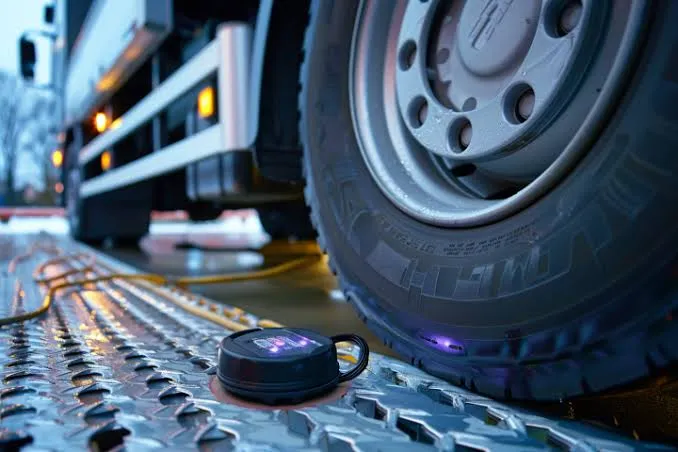

The yellow horseshoe lit up on the dashboard somewhere between a Tuesday grocery run and a Thursday commute. The driver glanced down, told themselves they’d stop at the gas station on the way home, and then forgot. Three weeks later, the right rear tire let go on a highway merge and the car ended up facing the wrong direction in the center lane. Nobody died.
When the file lands on an adjuster’s desk, that forgotten warning stops being a private annoyance between a driver and their car.
Tire pressure monitoring data has become a reliable breadcrumb in crash reconstruction. It’s time-stamped, it’s stored in the vehicle, and it can be pulled long after the driver has forgotten the warning ever existed. That shifts the calculus for everyone involved: the driver who ignored the light, the insurer trying to assign fault, and the lawyer deciding whether a case is worth taking.
Contents
Address the Warning Light Now or Explain It Later
The low-pressure telltale isn’t a suggestion. Under the federal standard that governs tire pressure monitoring, the warning is engineered to illuminate once a tire falls 25 percent below the manufacturer’s recommended cold inflation pressure. That’s not a casual threshold. By the time the light is on, the tire is already outside the range the vehicle was designed and tested to handle.
A driver has two paths once that icon appears. Address it the same day by adding air, getting the tire inspected, and keeping the receipt. Or carry on and hope nothing happens. The second path is cheap in the moment and expensive if a crash follows.
In a dispute over who caused what, an adjuster or opposing counsel won’t ask whether the warning appeared. The system logs that. They’ll ask what the driver did about it, and how long it stayed lit.
Who Pulls the TPMS History and When
TPMS data doesn’t live in one tidy place. Depending on the vehicle, pieces of it may sit in the sensors on each wheel, in the body control module, in the infotainment or telematics unit, and, on connected cars, on the automaker’s servers. Some of it overwrites in days. Some of it hangs around for months.
The first week after a crash is when preservation matters most. That timing drives a real choice. A driver who was hurt and believes someone else was at fault should talk to counsel before the car gets sent to salvage or the automaker’s cloud log rolls over. A car accident attorney can send a spoliation letter to the insurer, the tow yard, and the manufacturer so the sensors, the wheels, and any connected-car data get held rather than crushed or deleted. Waiting a month to decide is often how the most useful record disappears.
The flip side applies too. A driver who may be blamed should assume the other side will go looking. Deleting a service appointment from a phone app or declining to produce a maintenance log reads badly later. Honest preservation protects everyone’s version.
Decide What the History Actually Proves
TPMS logs are powerful, but they aren’t a verdict. They show pressure readings over time and when the warning threshold was crossed. They say nothing about whether a driver saw the light, understood it, or had a safe place to pull over. Reconstruction experts treat the data as one input alongside the event data recorder, tire forensics, and the physical scene.
What the history can do is tell a story about pattern. A single warning two hours before a blowout reads one way. A warning that stayed on for six weeks reads another.
Trial lawyers already use event data recorder outputs (speed, braking, throttle in the seconds before impact) to anchor a liability theory. TPMS history extends that same logic backward in time, into the days and weeks before the crash, where ordinary negligence accumulates.
Expect both sides to use the record. A plaintiff may argue the defendant drove on a severely underinflated tire for weeks. A defendant may argue the warning triggered only an hour before impact, during the same trip, and the driver was already heading to a service bay.
Decide How Much Weight to Give the Warning in Settlement Talk
A TPMS record cuts in whichever direction the facts send it. On the plaintiff side, a long-ignored warning on the at-fault driver’s car can push an insurer off a low opening offer, especially when paired with EDR data showing the tire’s behavior in the seconds before impact. On the defense side, a clean log, with the warning appearing minutes before the crash and the driver already slowing, can take the pre-crash negligence argument off the table.
The honest conversation to have early is which story the data tells. If the record is bad, settling sooner and with less noise may beat forcing the issue in deposition. If the record is good, holding the line gets easier. Either way, the number on the dashboard the driver swiped past last month is now a dated entry in a file somebody else is reading.