
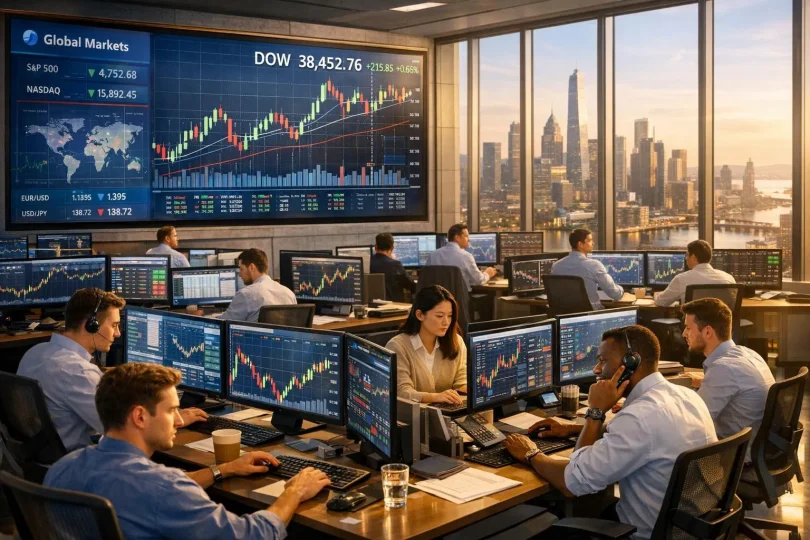

The global market has become an interconnected environment where economic decisions, technological developments, consumer behavior, and financial activity influence businesses across borders. A change in interest rates in one major economy can affect currencies, commodities, equities, and international trade within a short period.
For investors, companies, researchers, and business professionals, understanding these connections is increasingly important. Market information is now available through financial websites, research reports, trading platforms, economic databases, and real-time digital tools. The challenge is no longer simply finding information but understanding which information matters and how different indicators relate to each other.
Resources such as global marketing pdf documents can provide valuable background research, while global market moneycontrol resources can help users follow international financial developments. Futures data, indices, company valuations, and live market feeds add another layer of information for people who need a current view of financial conditions.
This guide explores the structure of international markets, the major forces influencing them, and the tools that can help users analyze changing conditions. It also examines real-time data, futures, market capitalization, and the importance of combining multiple sources before making financial or business decisions.

Contents
Overview of the Global Market Landscape
The global market is not a single physical location or exchange. It is a broad network connecting financial markets, companies, consumers, governments, investors, and international supply chains. Understanding this structure makes it easier to interpret individual market movements.
Definition and Scope of the Global Market
The global market describes the worldwide economic environment in which goods, services, capital, currencies, commodities, securities, and information move between countries and regions.
Its scope includes stock markets, bond markets, foreign exchange, commodity exchanges, banking systems, international trade, digital commerce, and cross-border investment. These components are closely connected because companies and financial institutions frequently operate across multiple jurisdictions.
A technology company, for example, may design products in one country, manufacture components in several others, and sell its products worldwide. Its revenue can therefore be influenced by exchange rates, consumer demand, transportation costs, regulations, and economic conditions in numerous markets.
International markets also provide opportunities for diversification. Businesses can enter new regions, while investors can gain exposure to companies and industries outside their domestic economies. However, international exposure also introduces currency risk, regulatory differences, political uncertainty, and variations in economic growth.
The modern international economy is therefore defined by connection. A development that begins in one region can affect businesses, commodities, currencies, and financial assets elsewhere.
Key Drivers Influencing Global Market Dynamics
Several forces continuously shape the global market, with economic growth, inflation, interest rates, technology, trade, and consumer demand among the most important.
Interest rates influence borrowing costs for households, companies, and governments. When borrowing becomes more expensive, businesses may reduce investment and consumers may become more cautious about major purchases. Lower borrowing costs can have the opposite effect by encouraging credit activity and investment.
Inflation also plays a central role. Higher prices can reduce consumer purchasing power and increase operating costs for companies. Persistent inflation can influence monetary policy and consequently affect currencies, bonds, equities, and other assets.
Technology has transformed international commerce as well. Cloud computing, artificial intelligence, automation, digital payments, and advanced logistics have created new industries and changed established business models.
Trade policies can also influence market conditions. Tariffs, import restrictions, trade agreements, and regulatory changes may affect the cost of products and the competitiveness of companies operating internationally.
Consumer behavior is another important factor. Demographic changes, income growth, digital shopping habits, and changing preferences can create opportunities for businesses while putting pressure on older business models.
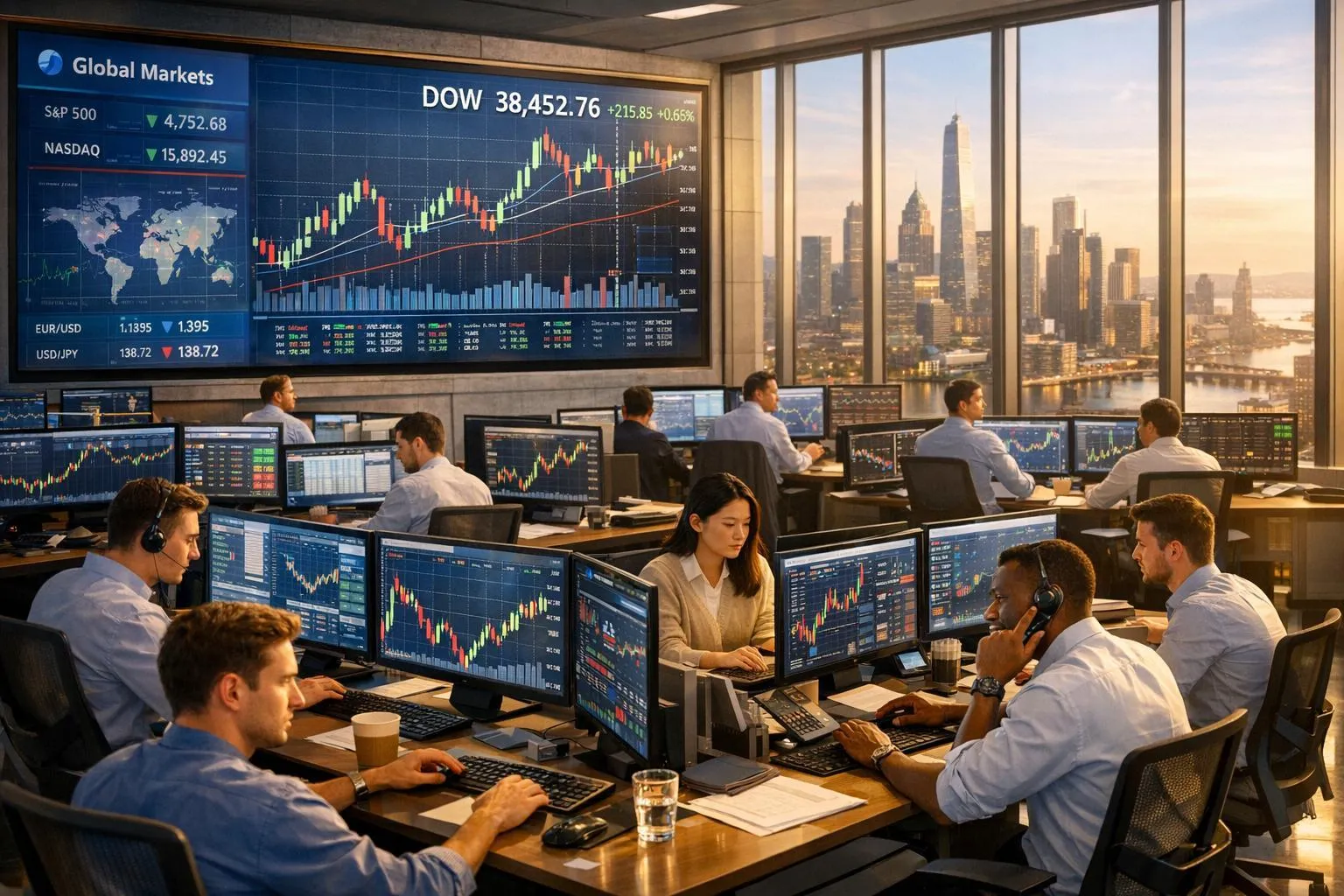
Major Global Market Segments and Industries
The global market contains many different segments, each with its own characteristics and economic sensitivities.
Equity markets allow investors to purchase ownership interests in publicly traded companies. Bond markets provide financing for governments and corporations while giving investors access to fixed-income instruments.
Foreign exchange markets facilitate international transactions by allowing currencies to be exchanged. These markets are essential for companies that import goods, export products, operate internationally, or generate revenue in multiple currencies.
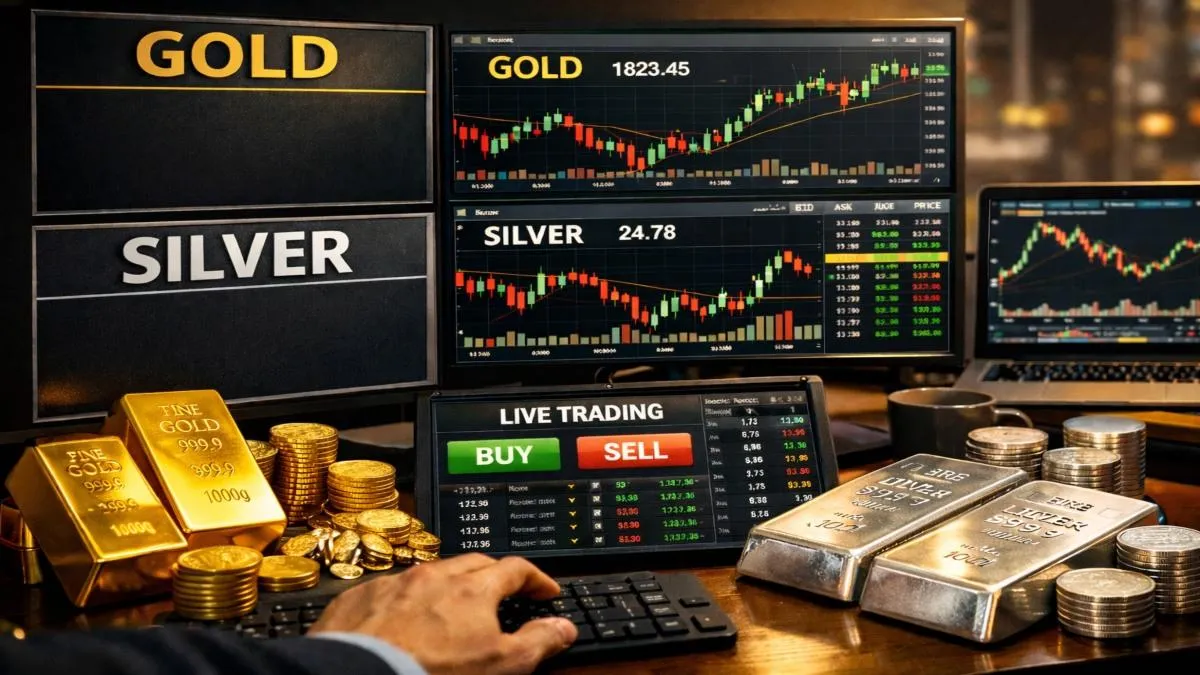
Commodity markets cover resources such as crude oil, natural gas, gold, silver, copper, agricultural products, and other raw materials. Commodity prices can affect production costs and consumer prices across numerous industries.
Technology is another major segment. Software, semiconductors, artificial intelligence, cybersecurity, telecommunications, and cloud services have become increasingly important to modern economies.
Healthcare, financial services, energy, manufacturing, transportation, real estate, consumer products, and entertainment also contribute significantly to international economic activity.
Each sector responds differently to economic conditions. Energy companies may be highly sensitive to commodity prices, while technology companies can respond strongly to innovation, investment expectations, and changes in interest rates.
Impact of Global Economic Policies on Market Behavior
Government policies can influence the global market by changing economic incentives, financial conditions, and business costs.
Central banks use monetary policy to influence inflation, economic activity, and financial conditions. Interest-rate decisions can affect borrowing costs, currency movements, bond yields, and investor expectations.
Fiscal policy can influence economic activity through taxation, government spending, infrastructure investment, and public programs. Large fiscal changes may affect consumer demand and business investment.
Trade policies can alter international supply chains. Tariffs may increase import costs, while trade agreements can reduce certain barriers between participating economies.
Regulatory policies also matter. New environmental, financial, technology, labor, or data regulations can create additional costs for some companies while creating opportunities for others.
Because expectations often influence financial prices before policies are implemented, market participants frequently monitor statements and economic projections as closely as actual policy decisions.
Tools and Resources for Analyzing the Global Market
Analyzing international markets requires more than a single price chart. Researchers can combine historical documents, financial platforms, futures information, market capitalization data, and economic indicators to develop a broader understanding of market conditions.
Utilizing Global Market PDFs for Research and Strategy
A global marketing pdf can provide structured information that is difficult to obtain from short market updates.
Research reports, industry studies, academic publications, economic reviews, and corporate documents are commonly distributed in PDF format. These materials may include historical data, industry trends, consumer research, market forecasts, strategic frameworks, and competitive analysis.
A global marketing pdf can be particularly useful when researching a new country or industry. Instead of focusing only on today’s market conditions, readers can examine longer-term developments and structural factors.
Businesses entering international markets may use these documents to research consumer behavior, market size, competitors, distribution channels, and regional trends.
However, readers should always consider the publication date. A document can remain useful for historical context while becoming outdated for current market conditions.
The methodology also deserves attention. Market research based on a limited sample or older assumptions may not accurately represent current conditions.
Using a global marketing pdf alongside current economic statistics and live market information can therefore produce a more complete research process.
The search phrase global market moneycontrol is commonly associated with users looking for international financial information, market movements, indices, commodities, and related economic coverage through Moneycontrol.
Financial platforms can help users follow major international markets from a centralized interface. Depending on the platform and instrument, information may include prices, charts, market summaries, financial news, and company information.
When reviewing global market moneycontrol information, users should distinguish between live prices, delayed data, historical figures, and editorial commentary.
This distinction is important because different instruments may have different reporting schedules. Some exchanges provide real-time information while other sources may publish delayed prices.
Financial commentary can also provide context around market movements. However, readers should separate factual market information from interpretation or opinion.
Searching for global market moneycontrol information can therefore be useful as part of a wider research process, particularly when users compare market developments across several regions.
Cross-checking major movements against other reputable financial sources can help users identify whether a significant price change is broad-based or specific to a particular instrument.
Accessing Global Market Live Futures for Predictive Insights
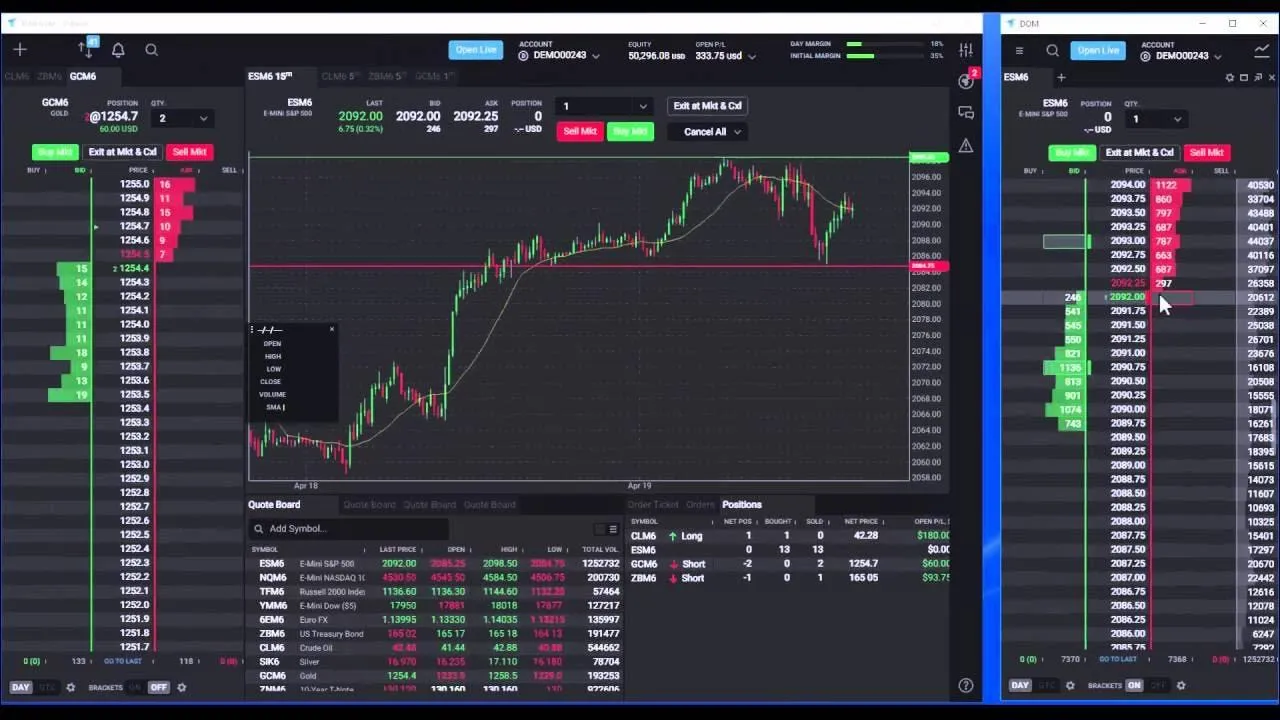
Global market live future data can provide information about futures contracts linked to financial indices, commodities, currencies, and other underlying assets.
Futures markets operate according to their own trading schedules and can continue moving when certain cash markets are closed. This makes futures particularly relevant to traders and analysts monitoring developments outside normal trading hours.
For example, equity-index futures may respond to economic announcements or international developments before a local stock exchange opens.
The phrase global market live future is therefore relevant to users seeking an early view of changing market expectations.
However, futures prices should not be treated as guaranteed forecasts. They represent current market pricing and expectations, which can change quickly as new information becomes available.
A better analytical approach is to combine global market live future data with economic releases, currency movements, bond yields, commodity prices, and developments in overseas markets.
This broader approach helps prevent a single futures movement from being interpreted without context.

Leveraging Market Capitalization Rankings to Assess Company Strength
Market capitalization is one of the simplest ways to compare the approximate equity value of publicly traded companies.
A global market cap ranking organizes companies according to their market capitalization, allowing researchers to observe the relative size of businesses across countries and industries.
Such rankings can reveal which industries represent a large portion of global equity valuations. Technology, financial services, healthcare, energy, and consumer companies may occupy different positions depending on market conditions.
A global market cap ranking can also demonstrate how investor valuations change over time. A company’s position may rise when its share price increases or when another company’s valuation declines.
However, market capitalization should not be interpreted as a complete measure of corporate strength. It does not directly describe profitability, debt levels, cash flow quality, management practices, or competitive advantages.
For that reason, the global market cap ranking works best when combined with financial statements, earnings information, valuation ratios, and industry-specific indicators.
Real-Time Analysis: Monitoring Global Market Live Data
Financial conditions can change rapidly when economic announcements, corporate news, or geopolitical developments appear. Real-time information allows users to observe these changes while they are occurring and provides a more current perspective than historical closing prices alone.
Importance of Live Data in Global Market Decision Making
Global market live information allows users to monitor current movements in indices, currencies, commodities, equities, and futures.
Live information can be particularly useful during major economic events. Inflation reports, employment statistics, central-bank announcements, and unexpected corporate developments can cause substantial changes in financial markets.
Companies may also use live information for operational purposes. A business with international suppliers may monitor foreign exchange rates when evaluating the cost of imported goods.
Manufacturers that depend on energy or metals may track commodity prices to understand potential changes in production costs.
Investors may use global market live information to observe market reactions, compare regional movements, and monitor instruments relevant to their portfolios.
Nevertheless, real-time information can create excessive noise. Small price movements do not necessarily indicate a major change in underlying economic conditions.
The value of global market live data therefore depends on how it is interpreted and combined with broader information.
Platforms and Technologies Providing Live Market Updates
Modern financial technology allows users to access market information through websites, mobile applications, desktop terminals, exchange feeds, and application programming interfaces.
Stock exchanges provide official information for listed securities, while financial data providers aggregate information from multiple sources.
Some platforms allow users to create watchlists and alerts for specific securities, currencies, commodities, or indices. These features can help users monitor important developments without constantly checking every instrument.
APIs can also connect market data to analytical software. Businesses may use these systems to create dashboards, financial models, automated alerts, and internal reports.
Artificial intelligence can process large datasets and identify relationships that might be difficult to detect manually. However, automated systems depend on data quality and model design.
A platform delivering fast information does not automatically provide accurate interpretation. Users must still understand what the data represents, when it was updated, and how it relates to other indicators.
Interpreting Live Futures and Indices for Investment Strategies
Futures and indices provide different but complementary perspectives on market activity.
An equity index represents a selected group of companies, while futures contracts may provide market pricing outside standard cash-market hours.
When index futures move significantly, analysts may examine economic announcements, overseas trading, currency movements, and bond-market changes to identify possible explanations.
The global market live future concept becomes particularly useful when markets in different time zones overlap or when an important event occurs outside regular trading hours.
For example, a major economic announcement released before a stock exchange opens may immediately influence futures contracts. Traders can then observe how expectations change before regular equity trading begins.
Historical comparisons can also help. Analysts may examine previous reactions to similar events to understand potential relationships.
However, historical patterns do not guarantee future market behavior. Every economic environment contains different conditions, expectations, and participants.
Case Studies: Successful Use of Live Market Data in Trading
Consider a hypothetical importer that purchases materials from overseas suppliers.
The company monitors currency markets because exchange-rate movements can change the local cost of imported goods. If the currency moves sharply, the finance team can reassess its exposure and review existing contracts.
Another hypothetical example involves a manufacturer that consumes large quantities of energy. Its analysts monitor energy futures to understand changes in expected input costs.
A portfolio researcher may monitor index futures before a domestic exchange opens. The information can provide context about overnight developments and international sentiment.
These examples show how live information can support business and financial analysis without guaranteeing a specific outcome.
The most useful systems combine real-time data with predefined objectives, risk controls, historical information, and fundamental analysis.
Global Market Capitalization: Ranking and Implications
Market capitalization provides a straightforward way to compare the size of publicly traded companies. It is widely used in financial research, index construction, portfolio analysis, and market reporting.
Understanding Market Capitalization and Its Calculation
Market capitalization is generally calculated by multiplying a company’s current share price by its outstanding shares.
The basic formula is:
Market Capitalization = Current Share Price × Outstanding Shares
If a company has a large number of outstanding shares and a high share price, its total market capitalization can become substantial.
Because share prices change during trading, market capitalization can also change continuously.
This measure should not be confused with enterprise value. Enterprise value incorporates additional financial factors such as debt and cash, while market capitalization focuses on the equity value represented by outstanding shares.
Market capitalization is therefore a useful valuation indicator but should not be treated as a complete measurement of corporate value.
Top Global Companies by Market Cap and Their Influence
The largest publicly traded businesses can have a substantial effect on major stock indices because of their significant valuations.
Large technology companies, financial institutions, healthcare businesses, energy producers, and consumer corporations may account for significant portions of major benchmarks.
When the valuations of these companies change, the broader indices containing them can also experience noticeable movements.
A global market cap ranking helps researchers identify which companies and industries occupy significant positions in worldwide equity markets.
The composition of major companies can also provide insight into broader economic developments. Rapid technological adoption, changes in consumer behavior, energy transitions, and demographic trends can influence which industries receive higher valuations.
Even large companies remain exposed to competition, regulation, changing demand, financial conditions, and investor expectations.
Market size therefore provides context but does not eliminate the need for company-level analysis.
Trends in Market Cap Rankings Over Recent Years
Market capitalization rankings can change considerably as share prices, earnings expectations, exchange rates, mergers, and business conditions evolve.
Technology businesses have experienced significant valuation changes during periods of rapid digital adoption. Energy companies can experience substantial changes during commodity cycles, while financial institutions may respond to interest rates and credit conditions.
Currency movements can also affect international comparisons. When capitalization figures are converted into a common currency, exchange-rate fluctuations can influence the relative positions of companies from different countries.
A global market cap ranking should therefore be viewed as a snapshot rather than a permanent structure.
Researchers comparing different periods should use consistent measurement methods and recognize that market conditions can change dramatically between periods.
Studying these changes can help analysts understand how investors have reassessed different industries and business models.
The Role of Market Cap in Portfolio Management
Market capitalization can help portfolio managers understand how their holdings are distributed by company size.
A portfolio concentrated in large companies can behave differently from one containing a broader mixture of large, medium-sized, and smaller businesses.
Capitalization-based indices are commonly used as benchmarks because they provide a systematic way to represent different sections of an equity market.
Portfolio managers may compare their holdings with relevant benchmarks to identify concentration or differences in sector exposure.
However, capitalization is only one consideration. Portfolio analysis may also include geography, industry exposure, liquidity, valuation, currency risk, income objectives, and individual financial circumstances.
The global market cap ranking can provide useful context, but it should be combined with broader financial analysis.
Conclusion
The global market is a constantly changing network shaped by economic growth, monetary policy, inflation, technology, trade, consumer demand, and international investment.
Understanding this environment requires more than watching individual prices. Researchers and businesses can combine historical reports, economic indicators, company fundamentals, market capitalization data, futures, indices, and real-time information to develop a broader perspective.
A global marketing pdf can provide structured research and historical context, while global market moneycontrol resources can help users follow financial developments and market information.
Real-time platforms add another dimension. Global market live information allows users to monitor developing movements, while global market live future data can provide insight into current futures pricing outside regular cash-market sessions.
Market capitalization offers another analytical perspective. A global market cap ranking can show how publicly traded companies compare in terms of equity-market value and how those rankings change over time.
No single indicator can fully explain international financial conditions. Live prices require context, rankings require interpretation, and research reports require attention to methodology and publication dates.
The modern global market rewards informed analysis because economic relationships are increasingly interconnected. By combining reliable resources with current information and careful interpretation, readers can develop a clearer understanding of the forces shaping international business and finance.
As technology continues to expand access to financial information, the ability to distinguish useful data from short-term market noise will remain an important analytical skill. The global market will continue evolving alongside technology, policy, trade, and consumer behavior, making continuous research essential for anyone studying international economic activity.